

Alabama Micro/Nano Electronics Science and Technology Center (AMNSTC)

Acting Director, Alabama Micro/Nano Electronics Science and Technology Center
About the Center
Founded in 1974, the Alabama Micro/Nano Science and Technology Center (AMNSTC) is devoted toward advancing microelectronics science, technology, and education that augments the state’s expertise and industrial base.
Housed within Auburn University’s Samuel Ginn College of Engineering, the center provides campus researchers with next-generation spacious facilities, capabilities, and forges deep relationships with government and industrial partners to tackle exciting engineering challenges.
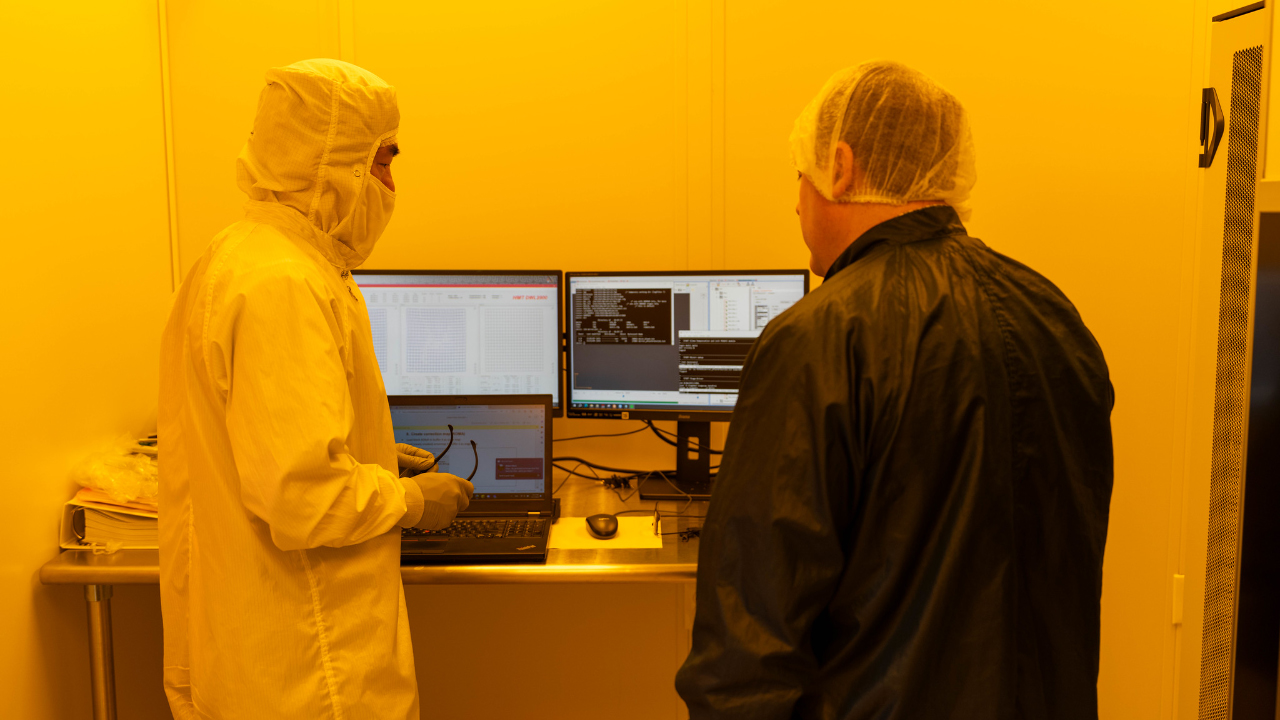
As an active interdisciplinary research laboratory and center that focuses on fabrication, packaging, and quantum systems, the AMNSTC continues to expand its capability toolbox through the investment of innovative equipment.
The AMNSTC will also remain a hub for microelectronics research that produces student-engineers whose have prominent careers in government, industry, and academia, where they will make impactful contributions to technology and humanity. The AMNSTC is positioned to lead Auburn University’s microelectronics research endeavors through the decades and beyond.
-
20,000+ Sq. Ft.
More than 20,000 square feet of laboratory space.
-
Quantum Research Capabilities
Quantum capabilities expanded with the installation of a dilution refrigerator, which allows testing at milli-Kelvin temperatures, and an e-beam evaporation system for the deposition of high-quality superconducting metal films.
-
Advanced Lithography
State-of-the-art direct write laser systems for lithography recently installed inside the micro/nanofabrication laboratory.
-
Grant-Supported Facility Access
Grant recipients receive complimentary or reduced-cost access to AMNSTC facilities when grants are run through the center.
-
Micro + Nano Technology Expertise
Specializing in silicon-based electronics, superconducting electronics, photonics, radio frequency communications, antennas, and microelectromechanical systems.