

Advanced Structural Engineering Laboratory (ASEL)
Director, Advanced Structural Engineering Laboratory
About the Center
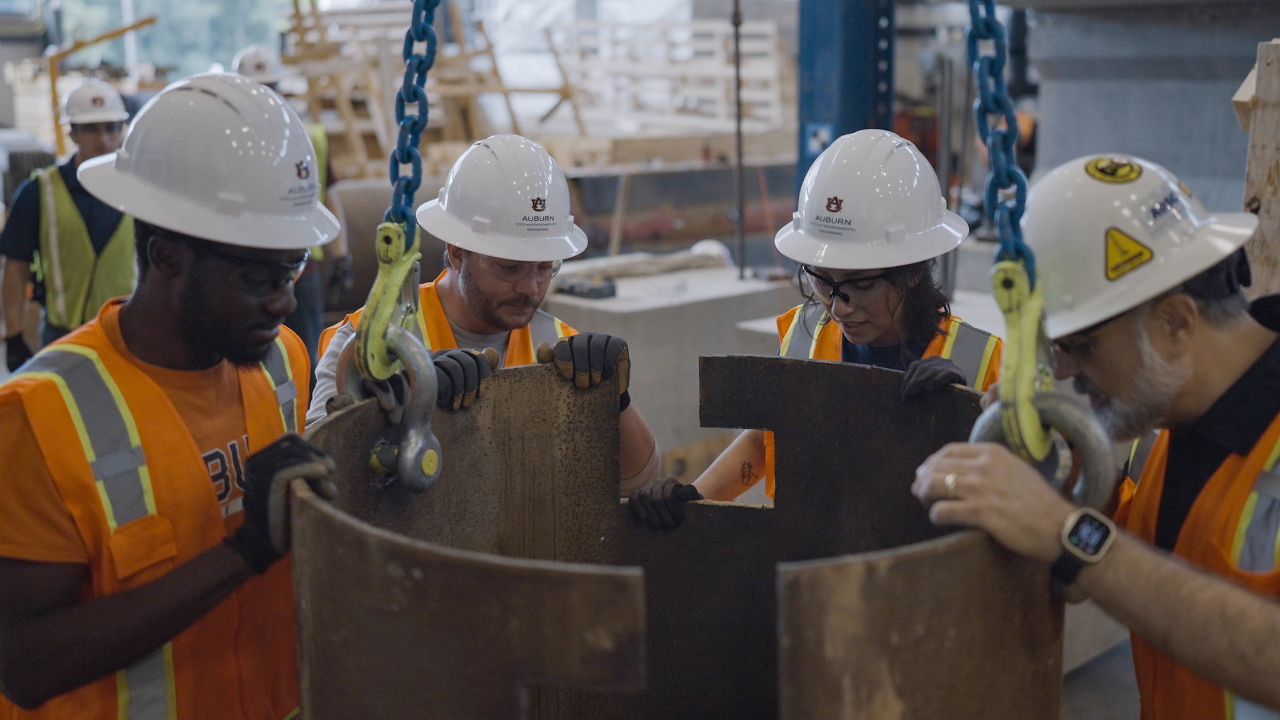
The $22 million Advanced Structural Engineering Laboratory (ASEL) at Auburn University is a state-of-the-art facility that provides experimental characterization and performance testing of engineering materials, structural components and systems, geotechnical materials, and integrated soil-structure systems. Primarily focused on transportation projects, ASEL is equipped to evaluate concrete and steel members up to 140 feet in length.
ASEL highlights include a high-bay laboratory with a strong wall and strong floor, featuring a geotechnical chamber engineered to handle extreme structural testing loads; a concrete materials research and testing laboratory; wind-testing capabilities that can replicate hurricane-force-level loads; and dedicated administrative space.
Partnering with world-class multidisciplinary faculty within Auburn University’s peer research centers, laboratories, and institutes, ASEL is positioned to accelerate research aimed at reducing impacts during extreme events and increasing the lifespan and safety of structures under all loading conditions. Moving forward, ASEL’s vision is to develop research that improves society by advancing infrastructure resilience and renewal knowledge.
-
30+ Researchers
Employs approximately 30 graduate students each year, along with several post-doctoral researchers, providing hands-on research experience for their future careers.
-
Vulcan High Bay Laboratory
The Vulcan High Bay Laboratory has a 200-foot by 73-foot footprint, with 120-foot by 45-foot strong floors and a 30-foot-tall L-shaped strong wall.
-
4,700-Cubic-Foot Test Chamber
ASEL’s 4,700-cubic-foot geotechnical testing chamber is 24 feet long, 10 feet wide, and 20 feet deep, integrated with the laboratory’s strong floor.
-
Transportation Infrastructure
Alabama Department of Transportation and Federal Highway Administration funding supports current research projects to fortify the long-term functionality of bridges and culverts.
-
National Research Impact
Active research projects aim to improve the steel building industry, advance national defense programs through blast-resistant structures, and develop future nuclear reactor foundations, with funding from the American Institute of Steel Construction, Air Force Civil Engineer Center, and Nuclear Regulatory Commission.