Mechanical engineering professor named to Fulbright Specialist Program roster
Published: Nov 18, 2026 10:00 AM
By Phillip Tutor
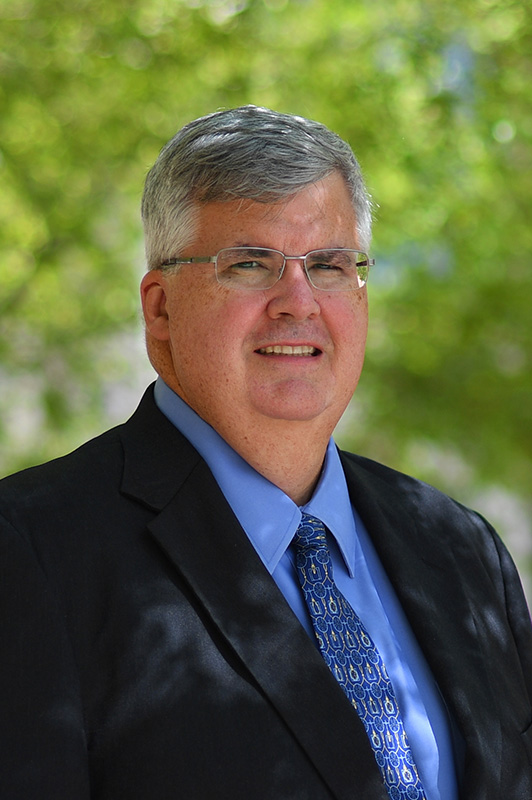
 Edward Davis, the Philpott-WestPoint Stevens Endowed Associate Professor in mechanical engineering and the graduate program officer.
International academics and scientific researchers may soon benefit from Edward Davis’ extensive knowledge of polymer engineering, biomaterials, nanocomposites and shape memory polymers.
Davis, the Philpott-WestPoint Stevens Endowed Associate Professor of mechanical engineering and the Department of Mechanical Engineering’s graduate program officer, has been named this fall to the Fulbright Specialist Program, an initiative that’s connected scientific leaders across the globe since 2001.
During his three-year term on the Fulbright Specialist roster, Davis will be eligible for matches with host institutions in more than 150 countries. Once matched, specialists spend between 14 and 42 days at host institutions.
“The Fulbright Specialist Program is unique because the host institution drives the project goals,” Davis said. “My career has required me to translate complex engineering concepts for everyone from industrial shift operators to Ph.D. scientists. That diverse background has given me the flexible, cross-cultural communication skills needed to quickly build trust and deliver results during these brief two- to six-week deployments.”
As part of the larger Fulbright Program, Fulbright Specialists are highly qualified academics and researchers who extend their knowledge to global institutions and attempt to solve some of the world’s most complex scientific challenges.
Public Affairs sections of U.S. embassies and Fulbright Commissions, the independent binational organizations that arrange for Fulbright educational exchanges, determine Fulbright Specialist selections. To be matched with a visiting U.S. academic or researcher, host institutions must submit project proposals to the respective U.S. embassy and Fulbright Commission, which then make recommendations to the U.S. Department of State’s Bureau of Educational and Cultural Affairs.
“Because the program is field-driven, the specific research portion depends heavily on what the host institution needs,” Davis said. “Based on my background, I anticipate consulting, teaching or capacity-building in areas like materials engineering and polymer circularity.”
An Auburn Engineering faculty member since 2007, Davis anticipates his selection as a Fulbright Specialist will benefit his students and research.
Regardless of their academic level, students will learn to “actively model how tackling the world's grand engineering challenges requires global engagement and collaboration,” he said, while joining the Fulbright Specialist roster aligns with his National Science Foundation and National Institute of Standards and Technology-funded sustainability projects.
“Seeing firsthand how other regions handle material waste will give me new perspectives that I can apply directly to my ongoing research into the supercritical extraction of end-of-life plastics,” Davis said. “Beyond the lab, navigating different academic cultures abroad will help me refine my teaching strategies, making me a more adaptable educator for our students back home.”
Media Contact: , pot0004@auburn.edu, 334-844-3591