Collaborative research using artificial intelligence to optimize assembly line production
Published: Oct 6, 2026 8:00 AM
By Joe McAdory
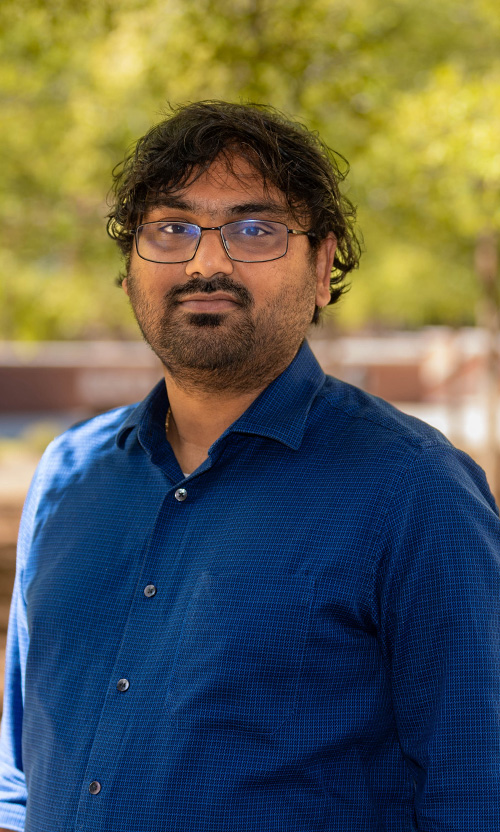
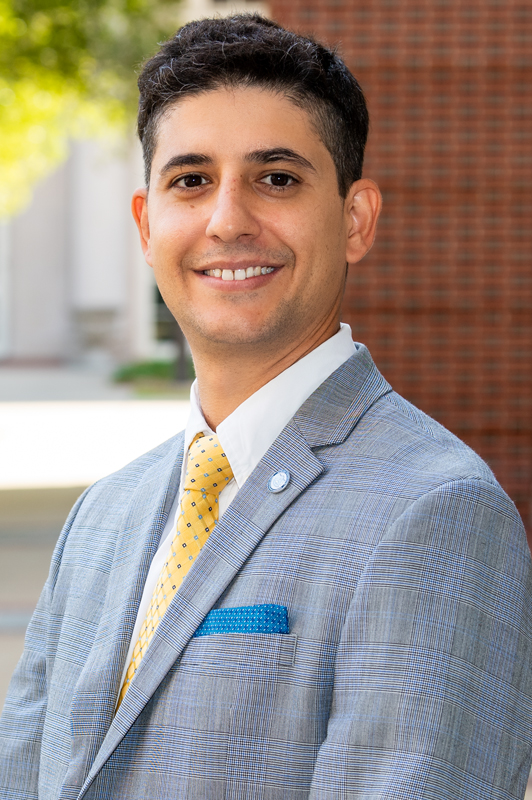
 Sathya Aakur, associate professor of computer science and software engineering, and Konstantinos Mykoniatis, associate professor of industrial and systems engineering, are developing artificial intelligence systems that monitor manufacturing tasks, identify potential problems and predict whether small errors are likely to create larger ones later in production.
Manufacturing errors can travel through multiple workstations before detection. Across manufacturing plants, assembly line operators complete their tasks and, sometimes, unknowingly pass defective parts downstream.
Defects are eventually discovered and production is halted.
Two Auburn Engineering researchers, Sathya Aakur and Konstantinos Mykoniatis, have other ideas.
Through a $500,000 National Science Foundation-funded project, “Closed-Loop Digital Twins for Adaptive Human-AI Collaboration in Cyber-Physical Systems,” Aakur, the principal investigator, and Mykoniatis, the co-PI, are developing artificial intelligence (AI) systems that monitor manufacturing tasks, identify potential problems and predict whether small errors are likely to create larger ones later in production.
“We want to maintain high quality, reduce the time taken to get to that quality and benefit the company, workers and consumers,” said Aakur, an associate professor in the Department of Computer Science and Software Engineering. “Any workplace that requires a sequential processing that changes hands, like an assembly line, that’s where research like this has the most impact.”
Mykoniatis, associate professor in the Department of Industrial and Systems Engineering, brings expertise in manufacturing systems and digital twins. He will help the team model the assembly process, connect physical operations with their virtual representations and evaluate whether the AI-enabled system improves the robustness and efficiency of manufacturing.
“He’s our manufacturing expert,” Aakur said. “He helps us make sure that what we develop with AI actually makes sense on the manufacturing floor.”
Mykoniatis said the longer-term goal goes beyond simply detecting mistakes. The researchers want to move toward a “poka-yoke,” or mistake-proofing, approach in which the digital twin and AI work together to recognize deviations and determine whether they could cause problems later in production.
“Our vision is to use the digital twin not just to monitor an assembly operation, but to make the process more mistake-proof,” Mykoniatis said. “By combining the digital twin with AI, we can understand what is happening on the assembly line, identify deviations as they occur and determine whether they could create problems later in the process. Ultimately, we want to move toward a system that can help prevent mistakes before they propagate downstream.”
The Auburn University Tiger Motors Lab, designed to simulate real-world assembly-line operations, will serve as the research testbed. There, researchers are building what Aakur describes as an adaptive cyber-physical system that pairs cameras with digital twins, virtual models of manufacturing processes, to monitor operations and support decision-making in real time.
“As it stands, catching an assembly line mistake depends on people,” Aakur said.
Aakur wants AI that reasons about cause and effect rather than simply checking whether a worker followed a written procedure. What if assembly was proper, but not in the assigned order? Right or wrong?
“That doesn’t necessarily make it a mistake,” Aakur said. “For example, you’re making coffee. You could put the milk in and then the sugar. It’s going to be fine. But then you can’t pour the milk without picking out the cup before you get the milk and sugar, right?”
Aakur said that understanding lets the models predict whether a deviation could result in a problem down the line.
“Then supervisors can plan for remediating this step downstream or immediately fix things,” Aakur said. “If some mistake keeps happening, we can try ‘what if’ scenarios in the digital twin before implementing on the assembly line.”
At the Tiger Motors Lab, cameras installed along the assembly line will capture task execution and stream video to a local server. AI models will extract manufacturing events, determine whether work is progressing as intended and feed that information into the facility’s digital twin.
That could also eliminate a manual step. Now, workers scan a barcode after each task to update the digital twin.
“Can we take out that manual process? The worker just does the task. They don’t have to log that they’ve done step one or step two,” Aakur said. “If they miss a step, it will be automatically flagged.
“The overall goal is to maintain the higher qualities, reduce the time taken to get to that quality and to benefit the company, the workers and the consumers. Anywhere that requires a sequential processing that changes hands, like an assembly line. That’s where research like this has the most impact.”
Media Contact: , jem0040@auburn.edu, 334.844.3447