Chemical engineering professor part of $591K USDA project to engineer bacteria for renewable fuels
Published: Oct 5, 2026 7:50 AM
By Joe McAdory
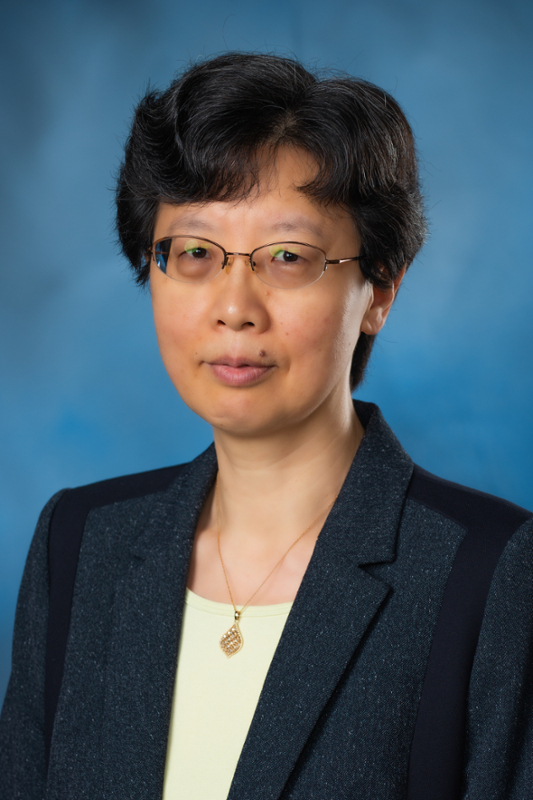
 Jin Wang, the Woltosz Professor in the Department of Chemical Engineering, is part of a $591,000 U.S. Department of Agriculture National Institute of Food and Agriculture project designed to convert renewable plant material into a chemical used to produce sustainable aviation fuel and biodiesel.
Jin Wang is taking the guesswork out of engineering bacteria that transform biomass into valuable chemicals.
Wang, the Woltosz Professor in the Department of Chemical Engineering, is part of a $591,000 U.S. Department of Agriculture (USDA) National Institute of Food and Agriculture project designed to convert renewable plant material into n-butyraldehyde, a chemical used to produce sustainable aviation fuel and biodiesel.
This isn’t designed to fuel your everyday automobile or lawnmower. They include 18-wheelers and heavy farm equipment – machines that require plenty of muscle packed into a small volume of fuel.
“That machinery consumes a very high density of energy,” said Wang, co-principal investigator on the three-year project, "Engineering non-model Clostridium for sustainable biomanufacturing of n-butyraldehyde from lignocellulosic biomass.”
“Diesel and jet fuel have a much higher energy density than gasoline — that's why heavy machinery and aircraft run on them instead,” she said.
The project is led by Yi Wang, former associate professor in the Department of Biosystems Engineering and currently assistant professor of biological and agricultural engineering at California-Davis.
Wang and Wang have collaborated for more than a decade, dating to a 2015 USDA-funded project when Yi Wang was on faculty at Auburn. That initial work produced a draft genome-scale model of Clostridium tyrobutyricum — the same strain at the center of this project. This new USDA project will refine that model and use it to guide the next round of strain engineering.
From her lab, Jin Wang will lead the metabolic modeling effort, building computer models of Clostridium tyrobutyricum to predict which genetic modifications are most likely to increase production before researchers spend time building and testing new strains.
Why use Clostridium tyrobutyricum? It ferments sugar without oxygen, so there’s no need to continuously pump air through the growth tanks and convert most of the sugar consumed into chemical products.
“Cell metabolism is a highly complex network,” Jin Wang said. “The computational approach is really looking at cellular metabolism altogether as a big picture. When you make one change, it’s not just affecting one reaction. It can affect many other reactions throughout the cell. Whatever potential bottleneck is going to come up, we’ll consider it ahead of time to improve the successful rate of different mutant strategies.”
Jin Wang said that “years of evolution” have optimized cells for their own survival and reproduction and that manufacturing chemicals on demand isn’t their chief priority.
“Push them toward an unnatural goal, and they tend to push back,” she said. “It’s like a student who really wants to play video games. You don't want them to. You want them to study. They’ll figure out all kinds of ways around it, and if you block one path, they find another. Cells do the same thing. When you push them to do something that doesn't serve their own purpose, they can activate genetic circuits to undo the change.”
Computational models will allow her team to evaluate potential changes before they commit to months of experimentation.
Once the models flag a strategy, Yi Wang’s lab at UC-Davis will build a mutant strain and test it. Those results are then given to Jin Wang, where the model will be refined.
“The challenge isn't simply producing renewable fuels,” Jin Wang said. “It's producing them efficiently and economically. If we can lower production costs and improve yields, these fuels become a much more practical alternative to petroleum-based products. Fossil fuels require resources that take millions of years to form. Biomass can be replenished season after season.”
Media Contact: , jem0040@auburn.edu, 334.844.3447