Auburn Engineering’s Human Systems Integration Center welcomes new leadership
Published: Oct 6, 2026 10:00 AM
By Carla Nelson
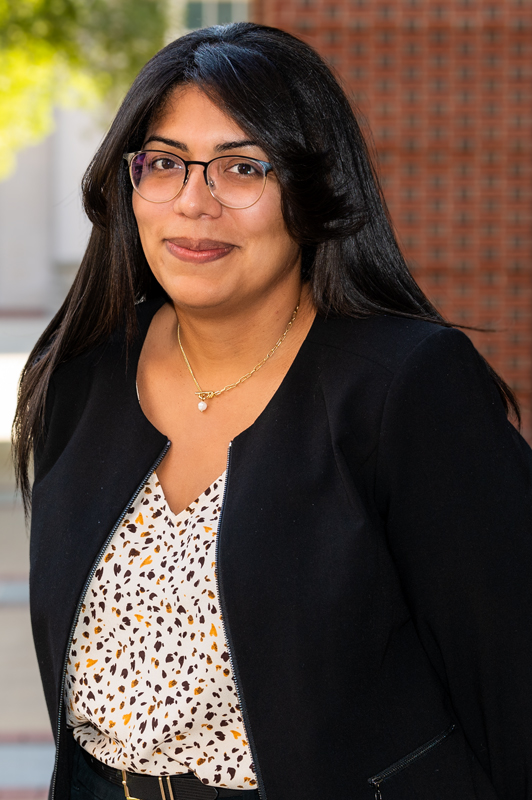
 Assistant Professor Missie Smith will lead the Occupational Injury Prevention (OIP) program, while Assistant Professor Yadrianna Acosta-Sojo will lead the Occupational Safety and Ergonomics (OSE) program.
Auburn University’s Human Systems Integration Center (HSIC), part of the Auburn University Industrial and Systems Engineering (ISE) Department, is welcoming new leadership as it continues to support graduate education, research and student success in occupational safety, ergonomics and injury prevention.
Assistant Professor Missie Smith will lead the Occupational Injury Prevention (OIP) program, while Assistant Professor Yadrianna Acosta-Sojo will lead the Occupational Safety and Ergonomics (OSE) program.
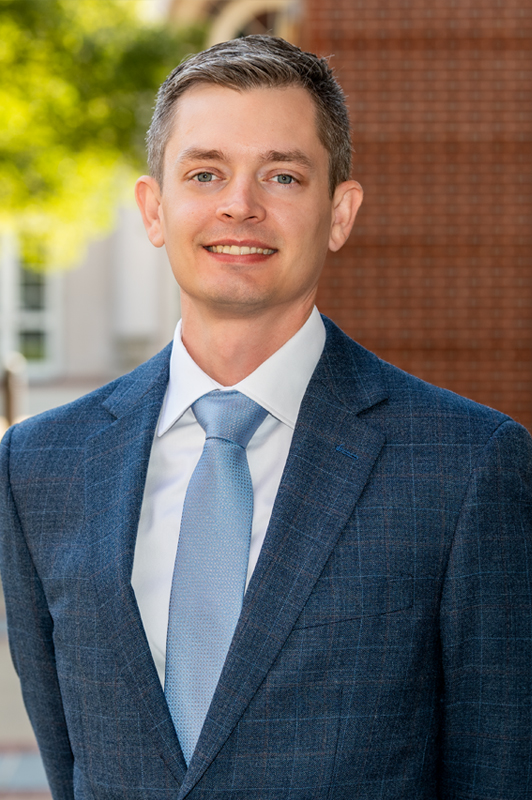
Mark Schall, HSIC’s former director, was promoted to ISE department chair in August.
In their leadership roles, Smith and Acosta-Sojo will assist with administration for each program, support student mentoring and progression, and contribute to reporting activities. The faculty members will serve as deputy directors for their respective programs while taking responsibility for the other program’s administration.
“By having a deputy director for each program, we’re building in a team approach rather than having one person serve as the filter for everything,” Smith said. “It allows us to share responsibilities and provide stronger support for both programs.”
The HSIC is a member of the Deep South Center for Occupational Health and Safety, a National Institute for Occupational Safety and Health (NIOSH) Education and Research Center. Through NIOSH funding, the center supports graduate education, research and professional development in occupational health and safety.
Accreditation strengthens human factors education
A recent six-year accreditation renewal for the center’s master’s and doctoral programs further demonstrates the strength of the center’s academic offerings. The Human Factors and Ergonomics Society completed its review and granted the six-year accreditation.
“I think the accreditation shows the strength of our courses, faculty and research,” Smith said. “It looks beyond the content of individual classes to evaluate the outcomes of the overall program.”
The accreditation also provides students specializing in occupational safety, ergonomics and injury prevention with an opportunity to pursue the Certified Professional Ergonomist credential through the Board of Certification in Professional Ergonomics. The certification is designed for established practitioners who demonstrate comprehensive expertise in the human factors and ergonomics discipline.
Supporting student development and research flexibility
Acosta-Sojo will oversee student progression and the occupational safety and ergonomics graduate certificate.
Her priorities include providing students with meaningful research opportunities, supporting recruitment and retention and preparing graduates for the evolving demands of industry.
“We want to provide students across our programs with opportunities to become involved in research,” Acosta-Sojo said. “We’re also focused on recruiting and retaining excellent students and preparing them for the constant changes taking place in industry.”
Acosta-Sojo said one of the program’s strengths is its ability to support students’ educational goals while allowing them flexibility in their research interests.
“Our funding allows students to explore research beyond what any one faculty adviser may be working on,” she said. “It gives them the flexibility to pursue their interests while receiving support through the educational and research program.”
This flexibility allows students to develop research experience in emerging areas and explore topics that align with their professional goals.
Evolving programs to meet industry needs
Smith said a key priority for the OIP program is ensuring that its curriculum and student opportunities continue to evolve as the research and professional landscape changes.
“I think it’s important to look ahead and build flexibility into our program,” Smith said. “The funding climate has changed, and a lot has shifted around us. We want our courses and programs to continue modernizing as those changes occur.”
One area of potential growth is data analytics. Smith said the program has seen increased interest from students in the field and is pursuing funding to establish a data analytics path within OIP.
“Our hope is to offer options that appeal to the students we have today while creating new opportunities for future students,” she said.
A collaborative vision for the future
Smith and Acosta-Sojo said they are focused on evaluating how the programs can continue to serve students and respond to changes in occupational health, safety and ergonomics.
“I think we’re both looking at our programs through fresh eyes and with a new perspective,” Smith said. “How can we evolve to address the changes happening around us while making the programs as effective as possible for students?”
Schall said he has tremendous confidence in Acosta-Sojo and Smith and the leadership they will provide for these programs.
“They bring different strengths and perspectives to their roles, and I’m excited to see how they work together to build on the success of HSIC," he said. "I’m confident that the future is very bright for our students, our faculty and these programs.”
Media Contact: , carla@auburn.edu, 3347400221