Auburn Engineering faculty part of $4.8 million NSF project to bring AI-powered networks to disaster response
Published: Oct 19, 2026 10:00 AM
By Joe McAdory
 Heterogeneous Edge Intelligence for Disaster Response Analytics is a National Science Foundation-funded project that combines expertise in artificial intelligence, wireless communications and emergency management to improve disaster response.
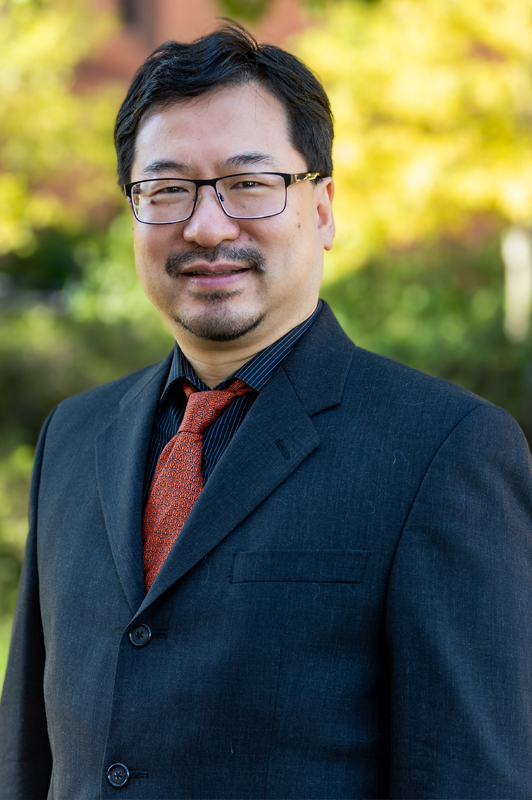
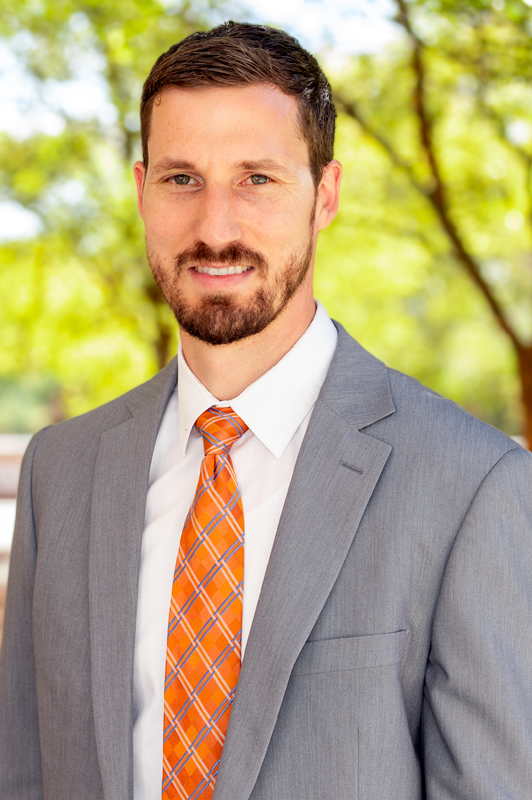
Three Auburn Engineering researchers — Yin Sun, Shiwen Mao and David Roueche — are part of a $4.8 million national effort to help first responders access essential data when every second counts.
Heterogeneous Edge Intelligence for Disaster Response Analytics (HEIDRA) is a National Science Foundation (NSF)-funded, Purdue University-led project that combines expertise in artificial intelligence (AI), wireless communications and emergency management to improve disaster response.
“During disasters, first responders are often overwhelmed with information while operating in environments where communications can be limited or unreliable,” said Sun, project co-principal investigator and the Godbold Associate Professor in the Department of Electrical and Computer Engineering. “Because disaster response is highly time-sensitive, critical information must be collected, processed and delivered to first responders while it can provide the greatest operational value.”
As part of the overall HEIDRA project, Sun serves as a co-principal investigator on this NSF VINES (Verticals-enabling Intelligent Network Systems) Track 2 project. The three-year, $653,000 award to Auburn University supports Sun’s development of importance-based, task-oriented networking technologies that prioritize mission-critical information for first responders operating in disaster zones.
“Our importance-based networking technology can help first responders identify the information they need from overwhelming amounts of data and ensure that critical information can be delivered despite limited power and spectrum resources,” Sun said. “Our efforts will contribute to next generation of advanced intelligent network systems.”
Sun and collaborators from Purdue, the University of Virginia, Saab and Nokia will also develop an edge-intelligence system that collects high-priority information and supports real-time processing and decision-making.
Mao, the Williams Eminent Scholar and Professor of Electrical and Computer Engineering and director of the college’s Wireless Engineering Research and Education Center, serves on the project as key personnel. Mao will lead efforts to develop energy-efficient communication technologies that keep emergency responders connected in challenging environments. He will also apply artificial intelligence to improve how devices share information and coordinate during disaster response.
Roueche, the Gottlieb Associate Professor in the Department of Civil and Environmental Engineering and expert on how structures can be better designed to withstand storm damage, serves on the project’s disaster response and stakeholder advisory board.
HEIDRA centers on three interconnected thrusts: developing distributed AI systems that function across diverse field devices, creating networking technologies that identify and transmit the most critical information and incorporating responder-in-the-loop decision-making so emergency personnel can assess and override AI-generated recommendations when necessary.
The project will advance through a series of increasingly complex demonstrations, culminating in field exercises at the Indiana National Guard's Training Center in Muscatatuck, Indiana. The 1,000-acre site is designed to replicate a range of disaster scenarios, providing a realistic environment to evaluate technology under development.
Media Contact: , jem0040@auburn.edu, 334.844.3447