Space Systems Graduate Certificate Program launches with expanding student cohorts
Published: Sep 22, 2026 8:00 AM
By Phillip Tutor
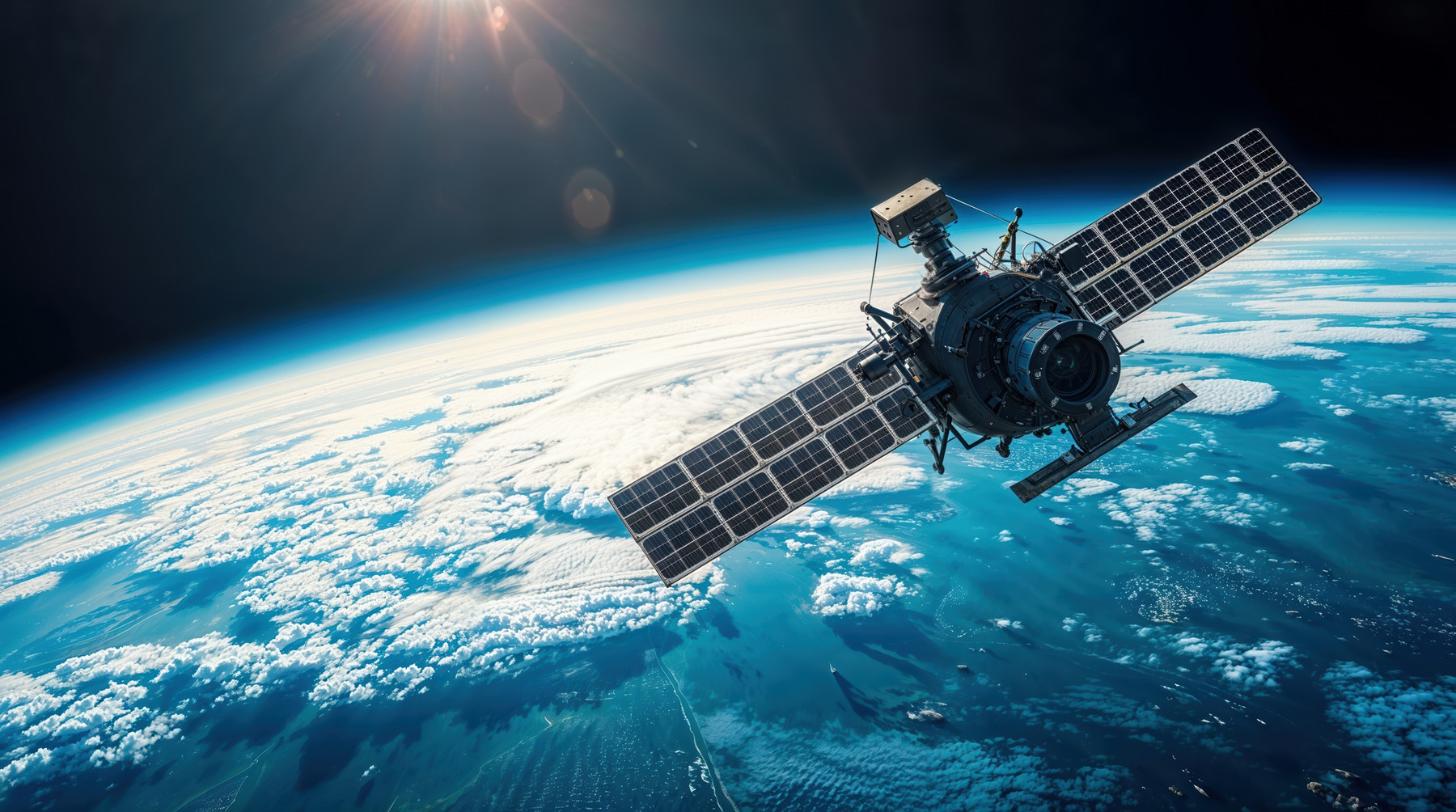 Auburn's Space Systems Graduate Program is filling an educational need for industry professionals.
From concept to inception to its third semester of operation, Auburn University’s fledgling Graduate Certificate in Space Systems has quickly proven popular among professionals from diverse backgrounds who desire a deeper understanding of satellite design, missions and core space system operations.
The nine-credit-hour, three-course program, an interdisciplinary collaboration between Aerospace Engineering and the College of Sciences and Mathematics, has already doubled its enrollment and expanded its curriculum since beginning in 2025.
Eight students enrolled in the program’s first semester and nine in its second. This semester’s cohort features 15 students, some of whom are industry professionals and NASA employees wanting additional knowledge of the space systems industry. The online program offers students the option of attending classes in Huntsville.
“The word is getting out,” said adjunct professor Craig Whittinghill, a 29-year veteran of the U.S. Navy who designed and teaches one of the program’s three core courses. “We're delivering a valuable product and education to our students who are seeking a baseline in space systems and how they work.”
“I am extremely pleased with the momentum the Space Systems Graduate Certificate has established in its first year,” said Brian Thurow, the W. Allen and Martha Reed Professor and chair of the Department of Aerospace Engineering. “The program came together quickly, and it was built on the expertise and commitment of an exceptional group of faculty and collaborators across Auburn.”
Whittinghill, also deputy director for growth and research development at Auburn’s McCrary Institute for Cyber and Critical Infrastructure Security, teaches the program’s first course, “Introduction to Space Systems.” That course — which “covers a lot of ground,” Whittinghill said — includes fundamentals of space environment and other concepts, including orbital mechanics, payloads and sub-payloads, launch vehicles and launch locations. Students also learn about communication services, remote sensing services, position navigation and timing services.
The second course, “Space System Operations,” taught by retired U.S. Air Force officer Douglas Bayley, gets “much more detailed,” Whittinghill said, and provides overviews of other in-flight applications, including operational orbits and orbital maneuvers.
The third course, “Spacecraft and Satellite Architecture Design and Integration,” taught by Davide Guzzetti, associate professor of aerospace engineering, includes an overview of spacecraft and satellite architecture design and asks students to create a mission design that uses space systems.
Two additional standalone courses are also available: “Space Program Management,” taught by Derek Tournear, Auburn’s director of space innovation, and a course on space weather taught by Hong Zhao, associate professor in the Department of Physics, that will debut in spring 2027.
When speaking with his students, Guzzetti occasionally uses a cooking analogy to describe how the program’s core courses work in tandem to expand their knowledge of modern-day space systems.
“The first class is the kitchen; these are the different tools in the kitchen, and we describe what everything is,” he said. “The second class covers the procedures — you shouldn't burn yourself, you should put the meat into the fridge. And the third class is when we cook a dish.”
Borrowing from his analogy, cooking with Guzzetti and his colleagues doesn’t require students to have advanced culinary skills before they apply to the certificate program. “That’s what the novelty of it is,” he said. “It caters to a different audience.”
Though that audience does need a basic understanding of algebra, geometry and trigonometry, Whittinghill said, the program is specifically designed for professionals who may already work in the space industry — such as accountants, electrical engineers or acquisition managers — but are not well versed in its broader applications.
Guzzetti considers the noticeable diversity of students’ professional backgrounds and academic motivations one of the program’s most unique features.
“That is very exciting to see,” he said. “Some are driven by personal curiosity and aren’t planning a career change. But others are people in the field with engineering backgrounds who have been assigned to different tasks during their careers and now are interested in returning more to space systems. They want to freshen up on their knowledge.”
Thus far, the initial cohorts have displayed a “passion and quality of what they were able to achieve” that has been surprisingly advanced, Guzzetti said. He smiles broadly when thinking of what they accomplished. “They were very engaged and had strong critical thinking they were able to apply with the right guidance and the right tools.”
As the department chair, Thurow sees the program as a successful addition to the education opportunities in aerospace engineering, both today and in the future.
“The strong and growing enrollment demonstrates the demand for a program that provides professionals from a wide range of backgrounds with an opportunity to better understand and contribute to the space enterprise. This first year has given us a strong foundation on which to continue building.”
Media Contact: , pot0004@auburn.edu, 334-844-3591