Doctoral student in chemical engineering earns research, leadership awards from Society for Biomaterials, Merck and AU Involve
Published: May 18, 2026 8:20 AM
By Joe McAdory
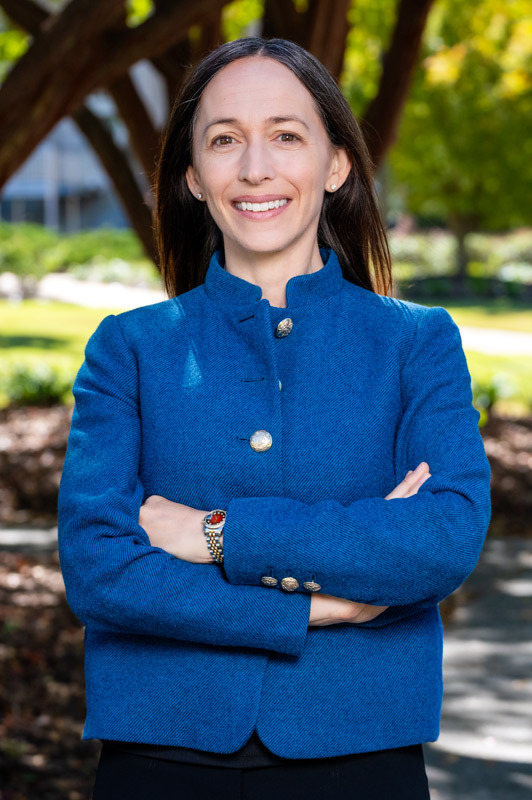
 Kwaghtaver Desongu with Professor Elizabeth Lipke.
Kwaghtaver Desongu wants to help prevent the kind of suffering that comes with cancer for patients and the families who stand beside them. How? By researching how metabolic changes reshape colorectal tumors, focusing on the signals released by insulin resistant fat cells and how those signals drive aggressive behavior.
“I believe in contributing to make the lives of people around me better and happier, whenever I have the chance,” said the doctoral student in the Department of Chemical Engineering. “Creating impactful research helps me satisfy my curiosity and quest for knowledge while also helping to improve the lives of other people.”
No wonder Desongu recently earned not one… not two… but three major awards:
- Merck Next Gen Leaders in Chemistry Award: Recognizes chemists from underrepresented groups for outstanding research contributions and supports their continued growth through mentorship, career development and networking opportunities. Graduate students Ayuba Akinpelu and Francis Mekunye earned the Merck Next Gen Leaders in Chemistry Award in 2025.
- Society for Biomaterials Student Travel Achievement Recognition (STAR) Award (Biomaterial-Tissue Interaction): This highly selective award honors students whose research advances understanding of how cells, proteins and tissues respond to engineered materials, particularly the mechanisms that influence long-term clinical outcomes.
- 2026 AU Involve Student Leader of the Year: Awarded to students who demonstrate exceptional leadership and a strong commitment to the principles of the Auburn Creed through their involvement in student organizations. Desongu is the National Organization for the Professional Advancement of Black Chemists and Chemical Engineers (NOBCChE) Auburn University chapter president.
"Kwaghtaver is an exceptional student and researcher, who has excelled in his research achievements and has simultaneously engaged in providing high quality research mentoring for our undergraduates, outreach to the community and leadership on campus and nationally in our field," said Elizabeth Lipke, the Uthlaut Endowed Professor in the Department of Chemical Engineering.
"His contributions deserve this recognition. Kwaghtaver is an exceptional student and researcher, who has excelled in his research contributions and is simultaneously engaged in providing high quality research mentoring for our undergraduates and outreach to the community."
In the Lipke Lab, Desongu studies how metabolic changes reshape the tumor environment.
“When a person develops insulin resistance, fat cells start releasing a very different mix of factors,” he said. “Those signals circulate throughout the body, including to the colon, where they can influence how a tumor behaves. We know this happens, but we do not yet know the exact pathways involved.”
To isolate those pathways, he is building a three-dimensional engineered tissue model of colorectal cancer. Using hydrogels to mimic the tumor’s structure, the system allows him to measure how cancer cells change movement, growth and mechanical properties under different metabolic conditions.
“Animal models are incredibly valuable, but they are also incredibly complex,” he said. “You cannot easily separate the effects of insulin resistance from all the other changes that come with obesity. By creating an engineered tissue, I can control every variable. I can expose cancer cells to signals from insulin-sensitive or insulin-resistant fat cells and watch how tumors respond.”
When exposed to media from insulin-resistant adipocytes, cancer cells show changes in migration, proliferation and morphology. They also become more aggressive.
“The cells begin behaving like they are preparing to invade,” he said. “They grow faster. The tissue becomes mechanically altered. These are the kinds of changes that could explain why colorectal cancer outcomes are worse in patients with metabolic disease.”
Desongu presented his research, “Engineered Colorectal Cancer Tissue Model in Obesity-linked Insulin-Resistant Microenvironment for Mechanistic Investigation of Disease Progression,” at the Society for Biomaterials annual meeting March 25–28 in Atlanta.
Beyond the lab, Desongu’s commitment to impact extends into leadership, where he helped organize outreach activities for children, hosted professional development programs and organized a career fair to help connect peer students to industry recruiters.
“During my leadership as president, I focused on growing leaders, not just followers,” he said. “I did not just want to get tasks done but to prioritize my team’s growth and create an impact that would outlive my presidency.
“Sustainable excellence and impact are systemic: they require cultivating a culture of excellence in communities and inspiring the next generation to do the same.”
Media Contact: , jem0040@auburn.edu, 334.844.3447