

The Auburn in Artemis: How engineering alumni helped return humanity to the moon
Published: Apr 10, 2026 7:00 PM
By Jeremy Henderson
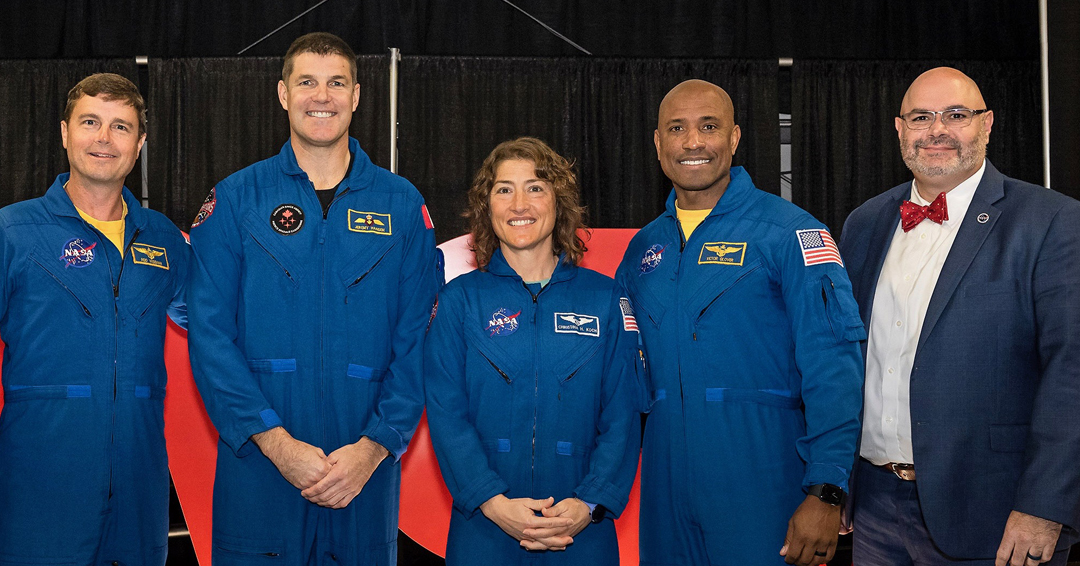 From left: Artemis II astronauts Reid Wiseman, Jeremy Hansen, Christina Koch and Victor Glover stand with Joseph Pelfrey, ’00 aerospace engineering, former director of NASA’s Marshall Space Flight Center.
The first crewed mission into deep space since 1972. The first eyes to see the far side of the moon in over half a century. The farthest humans have ever been from Earth. The foundation of NASA's fantastically ambitious Moon to Mars architecture.
From its April 1 launch to its April 10 splashdown, Artemis II, the historic latest chapter of America's legacy in space, was a near-perfect page-turner.
Here, in their own words, are just a few of the hundreds of Auburn Engineers who helped write it.
Joseph Pelfrey, ‘00 aerospace engineering | NASA Office of the Administrator senior executive, former director of NASA’s Marshall Space Flight Center
"At the launch site, I was actually at an area where there were a lot of former, retired astronauts. It was neat to watch the launch with them, knowing that some of their buddies were sitting on top of that rocket.
“Growing up as a small-town kid that always wanted to be an astronaut and work for NASA, to be able to work on the next rocket that took Americans back to the moon is pretty special. I started working on the Space Launch System (SLS) rocket back in 2010, in some of the early design concept work. It was awesome to see the fruits of the labor of so many people — a lot of Auburn alumni, too — that were part of various systems and development, whether it's building hardware or doing analysis or even supporting communications and telling the story about the team and the rocket. I don’t think the rocket would have flown without Dan Mitchell, with his expertise in leading software and avionics.
"To recognize that NASA hasn't built a new human-rated spacecraft since the late 70s with the shuttle program, you have a whole new generation of people who are part of building a brand new human-rated spacecraft. The excitement of Artemis is clear; we're returning humanity to the moon, but it's just the beginning of how we're going to enable more exploration on the lunar surface to sustain a presence where we have continuous missions. And then to build upon that, we go to Mars. It is a whole-of-nation approach. That's why we call it America's rocket because it's such a huge undertaking to build and certify and fly a brand new human-rated spacecraft.
"You can see Auburn's fingerprints all over, not only what happened with Artemis II, but the things that we're doing to move forward for the future missions that NASA has goals for. Over 10% of our civilian workforce at Marshall have an Auburn degree. The technology work and research that's going on in Auburn is going to help us feed forward to even further missions out, especially the work in advanced manufacturing. One of the projects Auburn had a large hand in, RAMPT, even won NASA's invention of the year, which was a tremendous honor to recognize the work that Auburn did to develop new techniques for how we can build the spacecrafts of the future. Am I proud of that? Just a little bit."
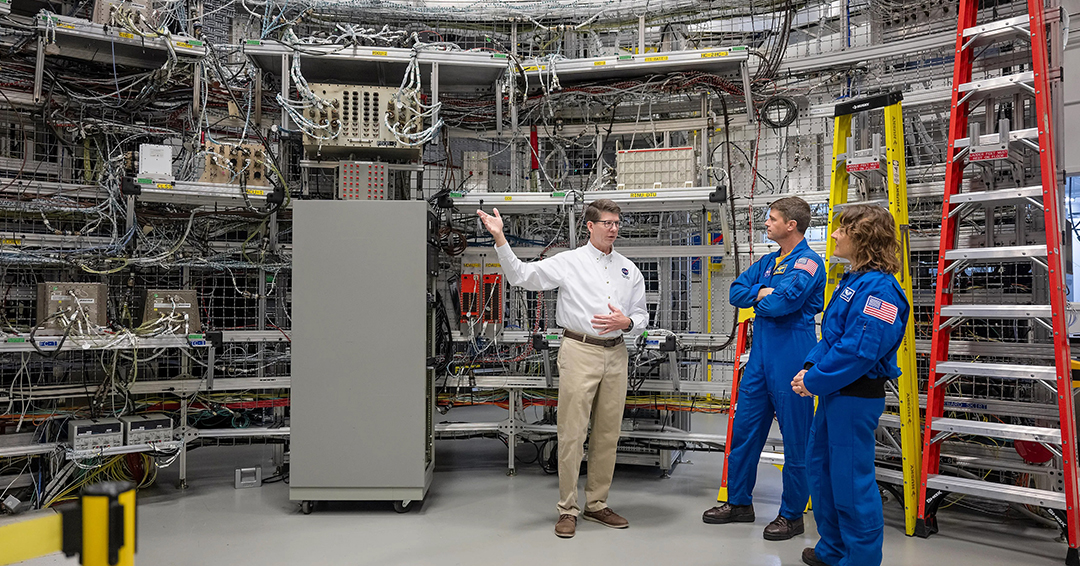
Dan Mitchell, ‘86 computer engineering | SLS integrated avionics and software lead engineer at NASA’s Marshall Space Flight Center
"On launch day, I was in firing room 4 of the Launch Control Center at Kennedy Space Center (KSC), in what we call the SLS data support room, and there were other Auburn grads in there with me, like Robert Champion. I have responsibilities being on console to support the pre-launch activities, monitor health and readiness of the vehicle, and lead any problem resolution activities necessary to keep the count going. It was a thrilling and terrifying experience all at the same time, and to see it perform essentially flawlessly was a big, highly satisfying event for everyone.
"I’m a 1986 computer engineering graduate from Auburn. My dad was an Auburn engineer from 1958 and a NASA employee, so I obviously grew up indoctrinated by Auburn. I kind of like what the Auburn Creed talks about: hard work. Getting through engineering is hard work. It’s hard work getting prepared during the design, the build, the verification and supporting all the launch planning activities to launch four people successfully into space. That’s hard work, and hard work pays off."
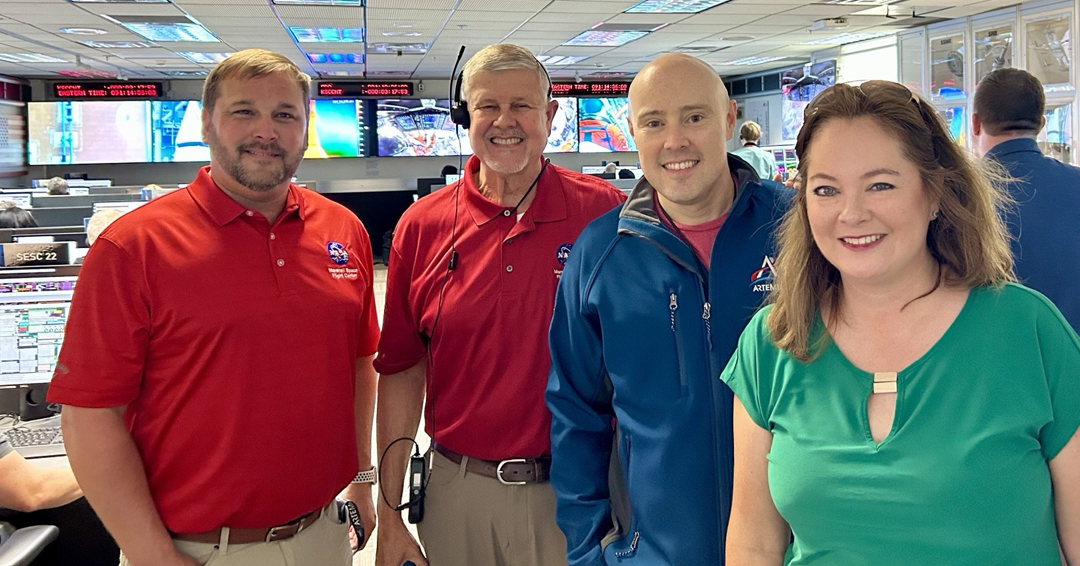
Paula DeCesaris, ‘97 aerospace engineering | Space Systems Department director at NASA’s Marshal Space Flight Center
"I’m the Marshall Space Systems Department director, and my guys write all the flight software. The rocket only does what the software tells it to do; it’s the brains behind it all. For a launch like this, we had a lot of folks supporting from control rooms here in Huntsville, on console with headsets, talking directly to each other and monitoring every rocket function. There’s a million things that have to go right and 100 million things that could go wrong, so we monitor everything from thermal aspects to tanking to make sure it’s all correct.
"It hits me every day where I am in my career — I dreamed as a little girl of working for NASA. The dedication and passion of this team is just inspiring. We're doing something that's a part of history, and those four people on that rocket depend on you to make sure everything's safe. When the launch happened, I cried, of course. From an SLS perspective, everything has been as close to perfect as I’ve ever seen out of the hundreds of launches I’ve been through.
"I ended up at Auburn for my master’s in aerospace engineering, and it was the most serendipitous thing that could have ever happened. The aerospace engineering department was phenomenal then, and it still is. Now, at Marshall, we high-five and ‘War Eagle’ each other in the hallways. There are a lot of friendly jabs with people from other schools, but we are all one team."
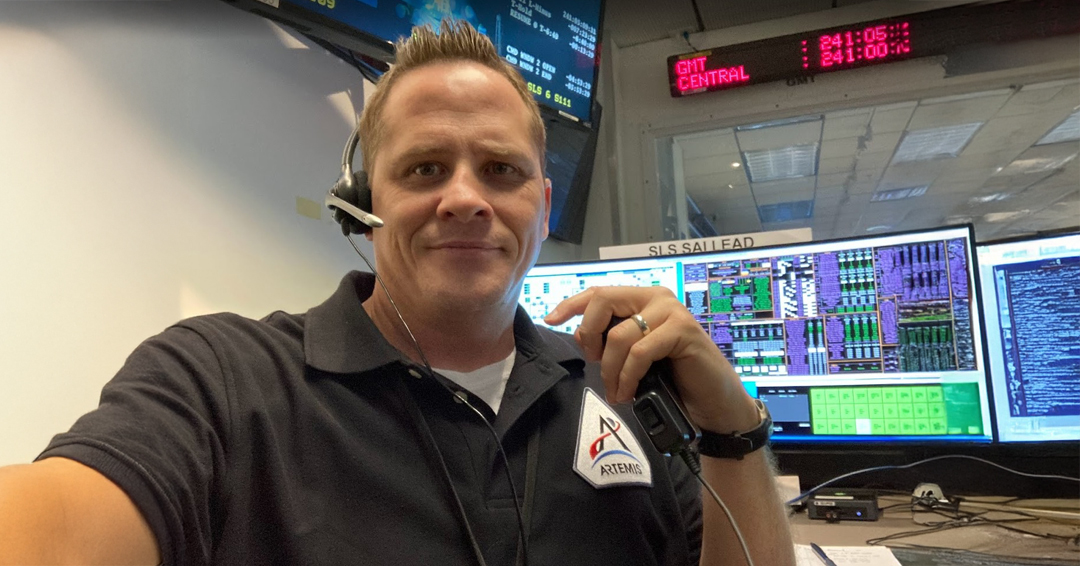
Joey Broome, ‘99 aerospace | CEO and technical director, Broome Aerospace
"I don't know how many people have been able to work both Orion and SLS in their career, but I've been able to put the blood, sweat, and tears into both. I started working on Orion back around 2004, eventually serving as the entry performance lead, handling the GNC (Guidance, Navigation and Control) for re-entry — the navigation, entry guidance, and landing ellipses. Later, I joined the SLS program right at the start, before it was even called SLS. I oversaw the integrated vehicle engineering to make sure the vehicle as a whole flies right, handling the loads and thermal environments during ascent.
"Watching the mission now feels amazing. To work through all that mostly with numbers, tools and simulations, and then see it actually perform the way you predicted is pretty special. It’s a testament to a whole team of people who are just passionate about solving problems, taking on tough challenges, and breaking them down bit by bit to make it happen. Knowing we worked hundreds of problems to get from a vehicle on paper to one pushing a spacecraft around the Moon is just really cool.
"I was an Auburn co-op student, going back and forth between quarters at Auburn and the Johnson Space Center. I know how Auburn Engineering prepared me. I felt well-prepared to step into a deep engineering job where I was immediately using my degree every day for mission design and simulations. Now that I’m a business owner with my own aerospace company, I feel like I know what I’m getting when I hire an Auburn engineer. I know I’m getting a quality, well-trained and capable engineer."
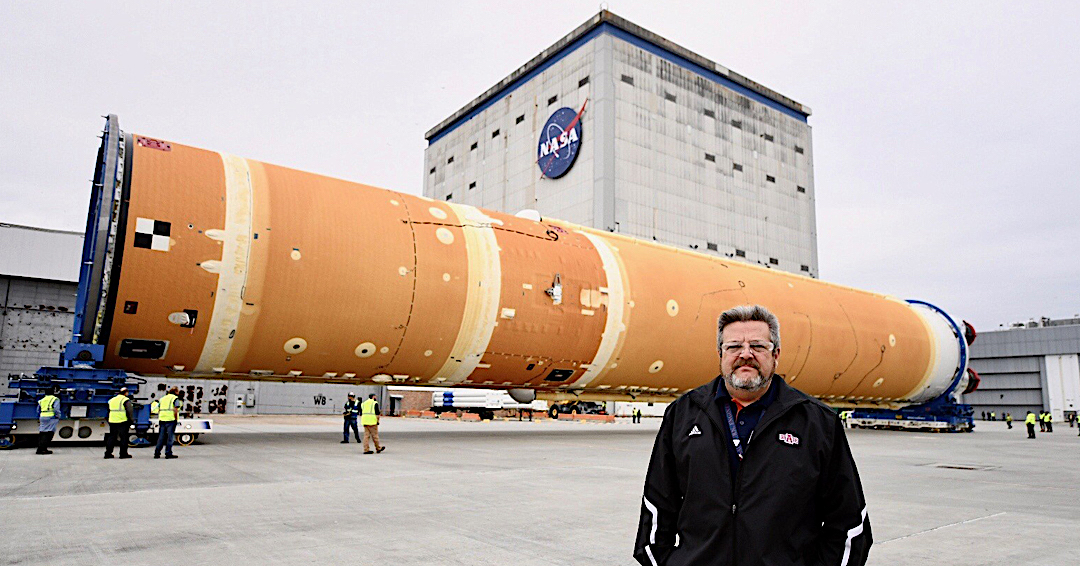
Robert Champion, ‘86 aerospace engineering | Director of Spacecraft and Vehicle Systems Department at Marshall Space Flight Center
"I graduated in 1986 in aerospace engineering and started at NASA that same September, just months after the Challenger accident. That loss really instilled in us the importance of what we do; it is human spaceflight, and that is the key thing we always have to remember. I’ve been here nearly 40 years now and have done a little bit of everything — I’ve been the deputy director of the propulsion lab, the director of the Michoud Assembly Facility where we built the rockets for Artemis I and II, and now I’m the department head for our Spacecraft and Vehicle Systems Department.
"On the day of the launch, I was working in the Design Support Room in Firing Room 4 of the Launch Control Center. My department houses the functions for thermal, trajectories, GN&C and debris. We had at least 100 people supporting that day, and I was monitoring the control panels — watching the ascent trajectory, the tank pressures and listening to the voice loops. The launch went so smoothly I didn’t even have to talk on the loop. It was just an amazing, near-flawless launch, which is a huge compliment to the engineers at Marshall and the team at Kennedy Space Center.
"Auburn grads are everywhere here; you run into them all the time. My deputy is an Auburn grad, and you’ll always see people walking around the building with an Auburn lanyard on. For a long time, Auburn was the leading college represented at Marshall, and we still have a very strong showing alongside schools such as UAH and Mississippi State. I’m a member of the Auburn Aerospace Advisory Council now, and I’m just really proud of the work we did to get these rockets out."
Media Contact: , jdh0123@auburn.edu, 334-844-3591