Chemical engineering professor elected to American Association for the Advancement of Science Class of 2025 Fellows
Published: Mar 26, 2026 3:55 PM
By Joe McAdory
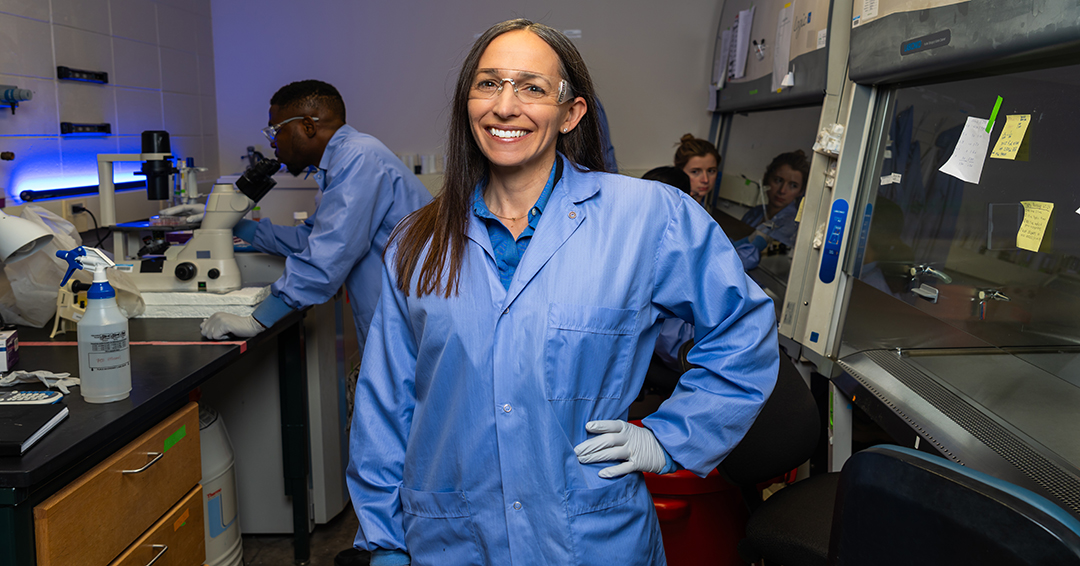 Elizabeth Lipke has more than 40 publications in leading journals and has been cited more than 2,000 times. She also holds several patents in biomaterial-supported cardiac differentiation and cell capture and encapsulation technologies.
Elizabeth Lipke has spent a career developing reproducible engineered heart and cancer tissues, enabling scientists to better understand disease, test drugs and advance therapies.
The American Association for the Advancement of Science (AAAS) has taken notice.
Lipke, the Uthlaut Endowed Professor in the Department of Chemical Engineering, was recently elected as an AAAS Fellow for making “seminal contributions to cardiovascular and cancer tissue engineering, including biomaterial design to support vascular re-endothelialization, advancing engineered cardiac tissue and cardiomyocyte biomanufacturing, and in vitro recapitulation of the tumor microenvironment.”
AAAS Fellowships are among the most distinguished recognitions in the science community, awarded each year to roughly 500 scientists, engineers and innovators whose contributions have advanced science or its applications.
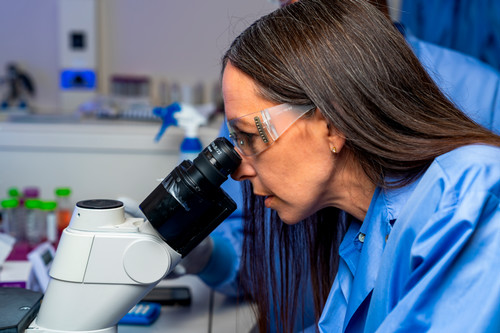
“This is particularly special because the association’s advocacy for science is significant,” said Lipke, an AAAS member since she was in graduate school who was also inducted into the American Institute for Medical and Biological Engineering College of Fellows (AIMBE) in 2024. “Another aspect of this honor that stands out is that it’s recognition by the broad scientific community of the long-term work by me and my team here at Auburn University.”
Lipke has more than 40 publications in leading journals and has been cited more than 2,000 times. She also holds several patents in biomaterial-supported cardiac differentiation and cell capture and encapsulation technologies.
“Dr. Lipke’s election as an AAAS Fellow speaks to the depth and reach of her contributions to the scientific community,” said Selen Cremaschi, chair of the Department of Chemical Engineering. “Her work has inspired new approaches, informed new lines of inquiry and helped shape the direction of research in areas critical to human health. Honors like this highlight the caliber of faculty we are fortunate to have in our department and demonstrate the impact the Samuel Ginn College of Engineering is making on national and global scientific conversations. We are thrilled to see her achievements recognized at this level.”
With her election, Lipke becomes the college’s second AAAS Fellow. J. David Irwin, professor and head emeritus and former chair of the Department of Electrical and Computer Engineering, was elected in 2008 and is a member of the State of Alabama Engineering Hall of Fame.
Lipke’s research group, the Lipke Lab, builds reproducible models of heart and cancer tissues and studies how to reliably generate the same mixture of cell types. That research includes patented methods for forming contracting heart tissue directly within biomaterials and the development of spherical microtissues using hydrogels that transition from liquid to solid in one second under visible light.
The key: consistency.
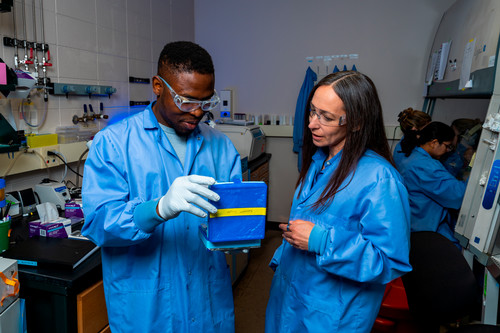
“In all of our tissue engineering work, we aim to understand which cell material and cell-cell interactions drive cells to behave as they do inside the body, when they are outside the body and direct them in the way we want them to behave — then achieve that consistently every time,” Lipke said.
“When searching for more effective drugs for patients, engineered human tissue models provide valuable information that animal models and cells alone cannot provide. However, to use them, the person testing the drug needs confidence that all the microtissues they are testing are the same every single time. Similarly for use in the clinic, it needs to be possible to make enough of the cells the clinician wants to use for tissue regeneration, and for those cells to be the same every time.”
Lipke, a 2013 National Science Foundation (NSF) CAREER Award recipient, is co-leading a $2.5 million National Institutes of Health-funded study in 2022 linking colorectal cancer and obesity and authored a $1.5 million NSF-funded project the same year aimed at improving the body’s ability to produce heart cells. She also co-founded VivoSphere, a startup built on her lab’s research that developed a 3D cell encapsulation device to create human-like tissue models for cancer drug testing, which won first place in Alabama Launchpad’s Cycle 2 concept stage finals in 2023.
“As engineers, it is our role not only to use our tools to understand science, but to apply science to make the world a better place,” Lipke said.
The 2025 Fellows class will be recognized May 26 at the annual Fellows Forum in Washington, D.C.
Media Contact: , jem0040@auburn.edu, 334.844.3447