Center for Polymers and Advanced Composites to host three-part lecture series beginning Tuesday at Davis Hall
Published: Nov 6, 2025 12:55 PM
By Joe McAdory
 Speakers David Lukas and Katerina Strnadova from the Technical University of Liberec in Czechia will highlight electrospinning innovations that are advancing nanofiber materials from the lab to real-world biomedical use.
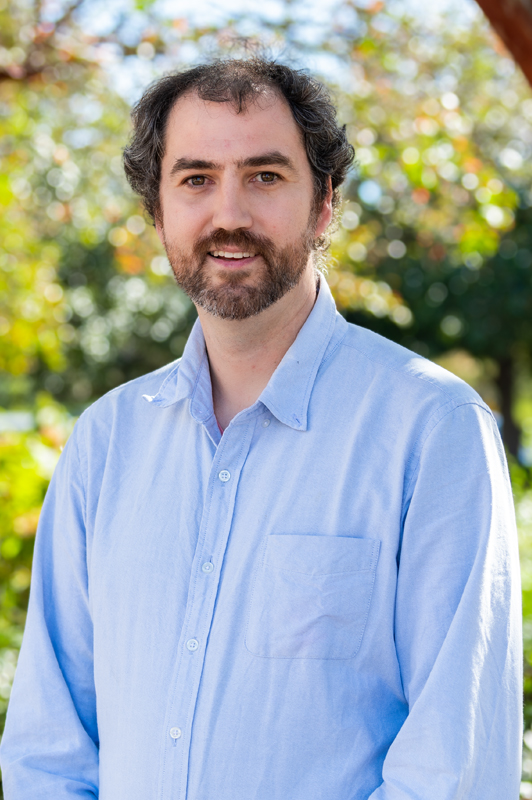
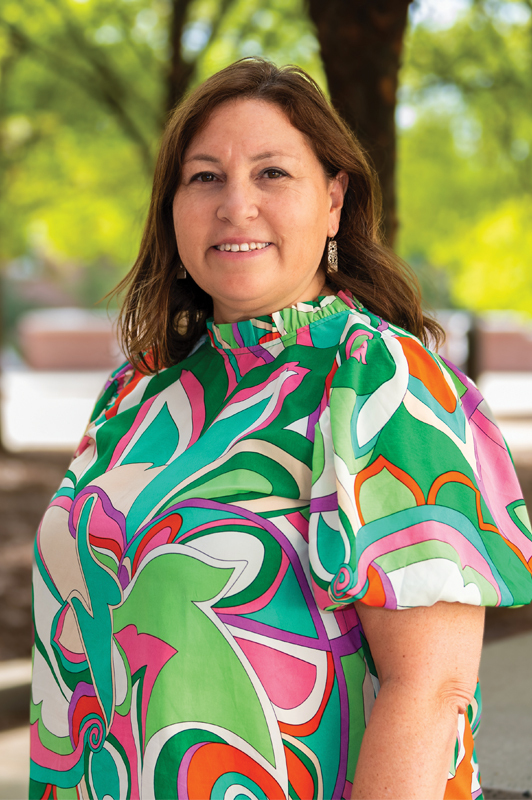
Hosted by the college’s Center for Polymers and Advanced Composites (CPAC), Technical University of Liberec (TUL) bioengineering professor David Lukáš and Dr. Kateřina Strnadová will present a three-part series Tuesday through Thursday, Nov. 11–13, in 355 Davis Hall, highlighting electrospinning innovations that are advancing nanofiber materials from the lab to real-world biomedical use.
“We're tremendously fortunate to collaborate and have Professor Lukáš and Dr. Strnadová visiting with us," said Bryan Beckingham, CPAC director and associate professor of chemical engineering. "The Technical University of Liberec and Professor Lukáš, in particular, are world renowned for being at the forefront of research and technology development for electrospinning polymer fibers. They’ll be joining Professor Vera Jencova, also from TUL, who is visiting us this entire fall semester as part pf a Fulbright-Masaryk Award for Research. Our ongoing collaboration between TUL and CPAC is testament to Auburn’s reputation and capabilities and I'm excited for the opportunity to deepen this important international collaboration.”
Maria Auad, associate dean for graduate studies and faculty development and former CPAC director said the visit “exemplifies the kind of international collaboration that has been central to CPAC's mission from its inception.”
“Professors Lukáš and Dr. Strnadová represent exactly the caliber of researchers we've worked to connect with Auburn — scientists whose work bridges fundamental discovery and real-world application,” she said. “I'm thrilled to see this partnership continuing to grow.”
Lukáš, who heads the Bioengineering Group in TUL’s Department of Chemistry, is recognized as one of Europe's leading experts in polymer nanofiber formation. A Fulbright Scholar and former TUL rector, he holds numerous patents on electrospinning technology and has received the Tribute of the Governor of the Liberec Region for his lifetime contribution to science.
Strnadová specializes in designing fibrous scaffolds for nerve tissue regeneration. As a Fulbright-Masaryk scholar, she conducted research at the University of Michigan exploring molecular mechanisms of tissue regeneration. Her work combines advanced materials engineering with cell biology, and she holds three patents on nanofibrous medical devices.
Jencova is the head of the biology part of the department and her research is focused on the development, functionalization and evaluation of nanofibrous materials for tissue engineering. These are mainly scaffolds produced by the electrospinning technology (from biodegradable and/or water-soluble polymers for applications such as wound dressings, bone, nerve, and vascular tissue engineering. She has authored/co-authored 11 patents/utility models) in this area.
A scientific group led by David Lukas has developed NANOTARDIS, an advanced wound dressing that mimics the body's extracellular matrix and accelerates healing.
NANOTARDIS uses electrospun nanofibers to create a three-dimensional structure that mimics the body's extracellular matrix — the natural scaffolding that supports cell growth and tissue formation. Unlike traditional wound dressings that protect injuries, the nanofibrous architecture actively promotes cell migration and tissue regeneration while maintaining proper moisture balance and allowing oxygen exchange.
Lukáš kicks off the series on Tuesday at 2 p.m. with “From DC to AC Electrospinning — Theory and Technology,” exploring how alternating current electrospinning increases production speed and fiber quality. On Wednesday at 1 p.m., Lukáš will present “Nanofibrous Yarns: Development of a New Scalable Technology,” examining advances that enable continuous production with consistent properties.
The series concludes Thursday at 1 p.m. with “Nanofibrous Materials for Medical Applications,” presented by Strnadová and Jencova, who will demonstrate how nanofiber structures can support tissue growth and repair by mimicking biological architecture.
“This series will provide Auburn students and faculty with an introduction to this important technology and insights into its use for producing fibers and fabrics for biomedical applications,” Beckingham said. “I know I've learned a lot from Drs. Lukáš, Jencova and Strnadová and their colleagues.”
Media Contact: , jem0040@auburn.edu, 334.844.3447