'Our graduates hit the ground running': Auburn Pulp and Paper Foundation conference highlights university's pipeline of industry leaders
Published: Oct 3, 2025 7:30 AM
By Joe McAdory
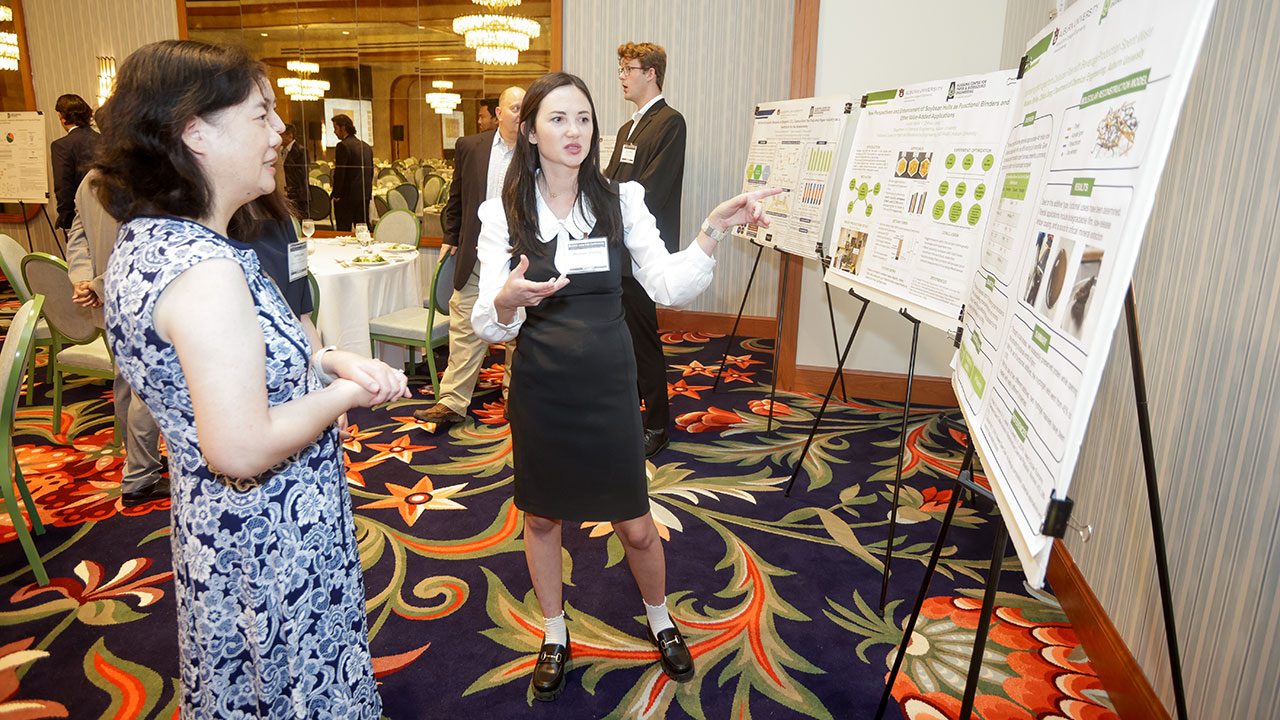 Madison Shelley, a graduate student and research assistant in the Department of Chemical Engineering, was among the students who had the opportunity to present research posters before industry leaders at the annual APPF conference Sept. 10-12.
Tyler Hart doesn’t mince words when describing the Auburn Pulp and Paper Foundation’s impact — and he has the numbers to back it up. Backed by more than 100 scholarships annually, the foundation equips Auburn engineering students with hands-on experience and industry exposure long before graduation.
“Our graduates hit the ground running,” said Hart, vice president of engineering at Georgia-Pacific and president of the Auburn Pulp and Paper Foundation (APPF). “Auburn students have already done multiple internships or co-ops. They know the tools, the people, the processes. When they start full-time, they’re ready on day one.”
That readiness is no accident. It’s the result of a deeply integrated partnership between Auburn University and the pulp and paper industry — a relationship built on scholarships, mentorship and hands-on experience. It was on full display at the recent APPF/Gulf Coast TAPPI fall conference, Sept. 10–12, hosted by Auburn University and sponsored by Smurfit Westrock.
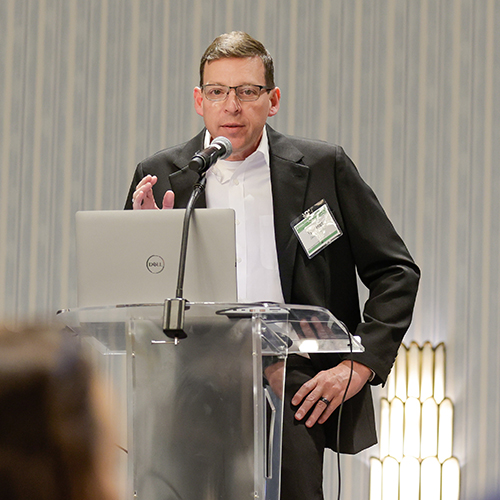
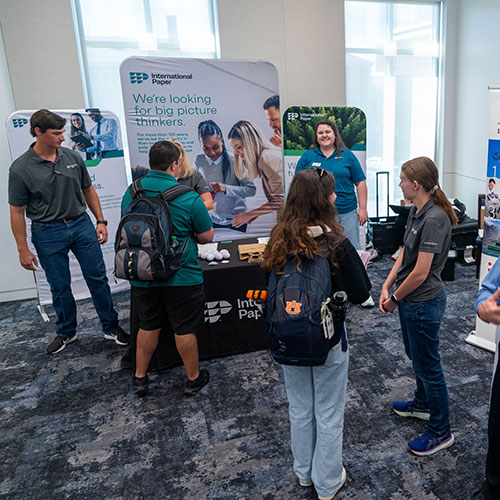
The annual conference brought together 49 companies, more than 200 attendees for the first time and raised more than $44,000 in student scholarships. It also featured technical sessions, student presentations and networking opportunities designed to connect students with industry leaders and prepare them for the workforce. A highlight of the event was Pulp and Paper Industry Day, which included exclusive interview sessions where students engaged directly with recruiters and professionals from across the sector, providing students with the opportunity to build connections and explore career paths in real time.
“The Auburn Pulp and Paper Foundation has been instrumental in preparing students for success post-graduation,” said Michael Reuss, a senior in chemical engineering. “The foundation has always strived to connect with students here at Auburn. With activities such as the career fair, our spring golf tournament or this banquet, we are not short on opportunities to connect with industry leaders and secure valuable work opportunities. During the five years I have been at Auburn, this program has set dozens of students up with strong, fulfilling careers in the industry.”
The conference also recognized outstanding student leadership through the APPF Scholar Awards. These awards reflect the legacy of individuals who have made lasting contributions to the foundation and the industry, and they serve as a reminder of the program’s commitment to cultivating future leaders. Seven students were honored for their contributions and potential:
- Tanner Stogner – Ted Crane Memorial Leadership Endowed Scholarship
- Gavin Knight – Neal McDevitt Scholar Award
- Zoe Parten – Terry Cantrell Scholar Award
- Michael Reuss – John Smyth Scholar Award
- Sophia Halstead – Jim Gresham Scholar Award
- Davis McCaleb – Chris Spraggins Scholar Award
- Phedra Peter – Charles Sewell Scholar Award
These awards reflect the legacy of individuals who have made lasting contributions to the foundation and the industry, and they serve as a reminder of the program’s commitment to cultivating future leaders.
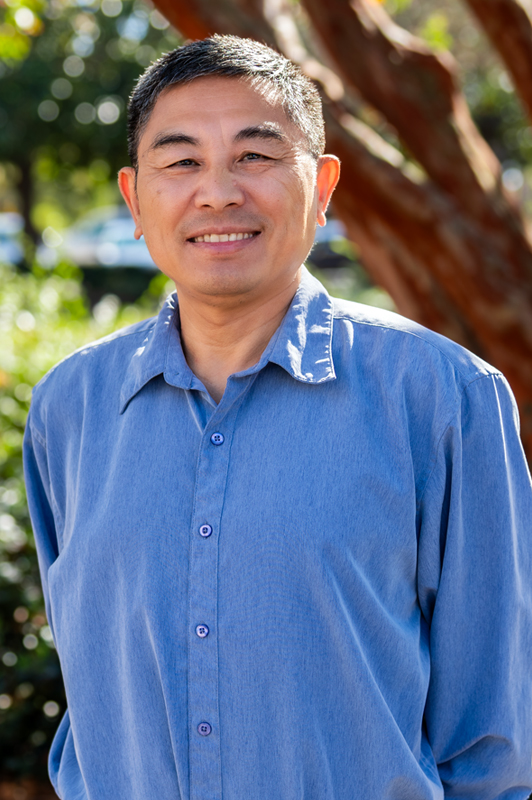
“The relationship between the university and the Auburn Pulp and Paper Foundation is a cornerstone of the success and growth of our pulp and paper program,” said Zhihua Jiang, Auburn Pulp and Paper Foundation associate professor in the Department of Chemical Engineering and director of the Alabama Center for Paper and Bioresource Engineering. “The Foundation plays a vital role in supporting students through scholarships, internships and co-ops and direct engagement with industry. These opportunities provide students with invaluable exposure to career paths, help them build professional connections and deepens their understanding of the industry's evolving needs.”
That engagement was further reflected in the conference’s technical sessions, which focused on both outreach and workforce development.
“The partnerships between academia and industry play a transformative role in shaping the educational experience and advancing both research and workforce development,” Jiang said. “These collaborations create a dynamic feedback loop where academic programs stay aligned with industry needs, and students are better prepared to enter a competitive and evolving job market.”
Bill Josephson, senior lecturer in the Department of Chemical Engineering and a longtime individual member of the APPF, added, “Among the highlights of the technical sessions are the presentations by our current first-year and senior students. The first-year students get a chance to introduce themselves to the industry professionals, while the seniors provide a review of their extensive experiences as an intern or co-op. It’s great seeing how the students have developed as a result of their exposure to the industry.”
Hart sees the results of Auburn’s academic-industry collaboration each time a new graduate steps into a mill — not as a trainee, but as a contributor ready to lead.
“When you get them as an intern or co-op, they’ve already spent months learning the process, the tools, the people,” Hart said. “When they come on full-time, they’re not just starting — they’re executing. You know they’ll find the right person, navigate the systems and get the job done.
“The program’s impact to the paper industry is huge, specifically for companies like Georgia-Pacific, International Paper, Packaging Corporation of America, Smurfit WestRock and others.”
He also emphasized the depth of industry involvement in the program.
“We’re not just building the foundation, we’re building the program at Auburn,” Hart said. “Our foundation members are integrated within the university. They help grow the program and educate our students.”
Hart began his Auburn journey in 1992, coming from Orlando, Florida, for what became a life-changing visit.
“I was dragged to an Auburn football game and fell in love with the university,” he said. “I skipped the game, took the ACT in Opelika and stayed in Auburn until the results came in. A nice lady in admissions looked at my score and said, ‘You got a 32… you’re in!’”
That moment launched a career that would span decades and eventually bring Hart back to Auburn — not just as an alumnus, but as a leader helping shape the next generation.
“For me, Auburn was more about relationships and problem solving than heat recovery balances,” Hart said. “Getting a degree helps you think in a way that finds opportunities and solves problems. Sometimes that means doing the calculations, and sometimes it means finding the expert and clearing the runway for them to execute.”
Today, Hart sees the same potential in Auburn’s current students and in the program that helped launch his career.
“If a prospective student asked me about the pulp and paper program, I’d tell them to look at the people in the room,” he said. “They’re all Auburn graduates, and most hold leadership positions within their organizations that are making impacts on their companies. Whether it’s chemical engineering, mechanical, electrical or industrial, it started with the foundation and it started at Auburn. That tells volumes. That’s what today’s students can have tomorrow.”
Media Contact: , jem0040@auburn.edu, 334.844.3447