

Civil and Environmental engineering associate professor awarded federal grant to research geographically isolated wetlands
Civil and Environmental Engineering
By Dustin Duncan
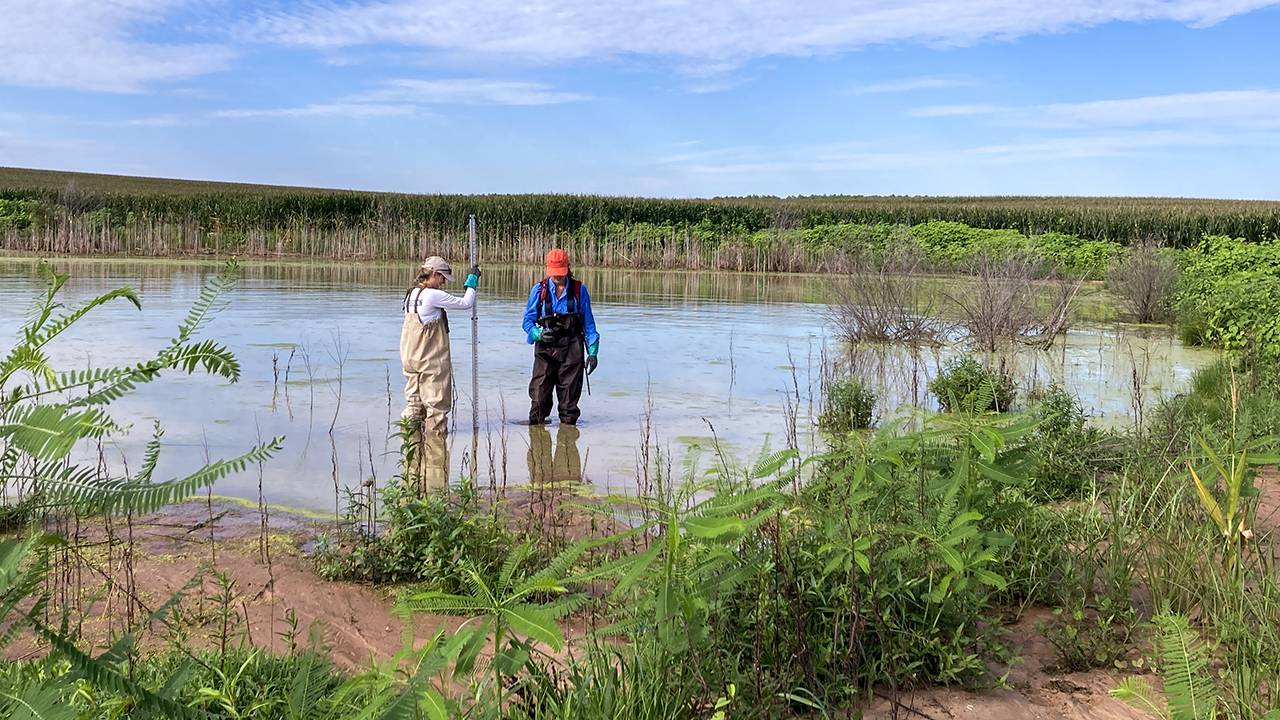
Frances O’Donnell, associate professor in civil and environmental engineering, is partnering with NASA to study geographically isolated wetlands (GIWs) and their environmental impacts.
GIWs — wetlands not connected to major bodies of water and abundant in the southeast coastal plains — provide benefits such as flood prevention, wildlife habitat and water quality improvements.
However, since GIWs are not protected by the Clean Water Act, it is difficult to monitor water levels over time sufficiently.
This is where O’Donnell comes in.
O’Donnell will collaborate with NASA’s Surface Water Ocean Topography (SWOT) mission to gather satellite data for monitoring water management in GIWs and extend the information to different U.S. regions to compare the impact of climate on hydrology.
The research has four objectives: verifying SWOT’s GIW data accuracy, comparing and scaling the data, developing methods to monitor water storage and management and applying the technique to GIWs in various regions. O’Donnell will determine how water resources managers can use SWOT satellite data in practice to extend the life of the mission.
“The goal is to use this data in ways that will benefit society and scientific understanding so that NASA can keep the satellite running, and we can keep collecting data,” O’Donnell said.
But with success comes struggle. One challenge the team faces is monitoring throughout wet and dry cycles, each of which can last up to three years — the typical time before a grant expires.
The cycles cause data gaps, leaving the team with insufficient results.
Long-term SWOT data can combat this. If the SWOT satellite continues operating, it will produce decades of data for O’Donnell and her team to produce results on how GIWs change throughout climate cycles.
Researchers