Putting AI to the test: Undergraduates make their mark in Auburn summer research program
Published: Oct 13, 2026 12:25 PM
By Joe McAdory
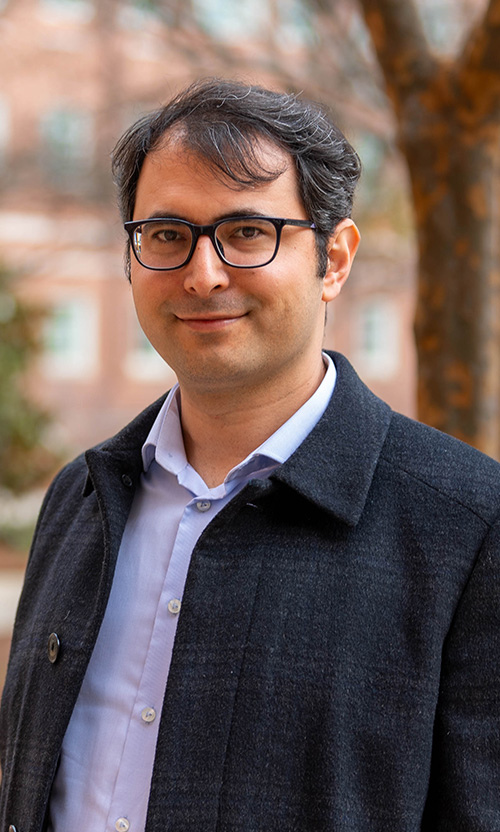
 From left, Ali Ghanbari, assistant professor in the Department of Computer Science and Software Engineering, PhD student Shawn Burnham and REU summer intern Tommi Rose Fahy at the recent ISSTA conference in Oakland, California.
How do you solve problems without answers? How do you test an idea that might fail? How do researchers turn ideas into results?
Three computer science students, including two from Auburn, learned those lessons, and more, during a 10-week Research Experiences for Undergraduates (REU) and Distributed Research Experience for Undergraduates (DREU) program hosted this summer by Computer Science and Software Engineering (CSSE) Assistant Professor Ali Ghanbari.
“Undergraduate research is valuable because students see a very different side of computer science than they see in classrooms,” Ghanbari said. “In research, they don't know whether an idea discussed by the group will lead to a concrete result. Students learn how to deal with uncertainty, how to implement ideas and how to test a hypothesis to see whether it holds. I'm proud to see these students have that opportunity.”
Similar REUs were hosted by Auburn Engineering over the summer, including Center for Advanced Polymers and Advanced Composites and the Department of Electrical and Computer Engineering.
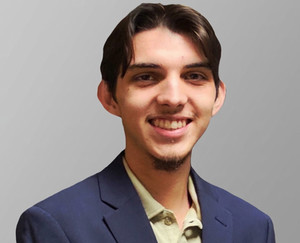
CSSE seniors Tommi Rose Fahy and Derrick Scott (REU) and University of Houston senior Steven Sanchez (DREU) spent the summer exploring one of the biggest challenges facing artificial intelligence (AI): quality assurance.
“So much in our lives is being done with AI,” Ghanbari said. “That's why it needs to be dependable. It shouldn't be abused or tricked.”
Fahy, Scott and Sanchez worked alongside graduate students on research projects involving the testing and evaluation of AI models. Ghanbari structured the projects differently than he would for graduate students, breaking the work into manageable pieces so the undergraduates could take on increasingly complex research tasks.
“For undergraduates, you have to plan ahead,” Ghanbari said. “What if this task that I'm assigning goes wrong? What is the next step? How can I break this big task into chunks that the student can handle?”
The work involved coding and experimentation, but Ghanbari also asked the students to read research papers and write about their findings.
“They were able to read advanced papers and absorb the information, summarize it and make their own conclusions,” he said.
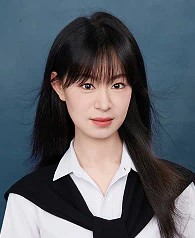
Fahy, with doctoral students Yidi Kao and Shawn Burnham, and Ghanbari, co-authored a research paper accepted for publication for presentation at the ACM SIGSOFT International Symposium on Software Testing and Analysis (ISSTA), among the top conferences in software engineering, Oct. 4-9 in Oakland, California.
Their paper, “ADEPT: A Unified Framework for Deep Learning Test Adequacy,” presents a new framework that streamlines the evaluation of AI systems, helping researchers determine whether deep learning models have been tested thoroughly enough to be trusted in real-world application.
“Tommi Rose is an undergraduate and now she has a published paper on her CV,” Ghanbari said. “That’s a huge achievement as it can be very helpful if she wants to pursue graduate studies, and it can also be a big help in finding a job.”
Not every REU/DREU paper was published.
Sanchez co-authored a second paper with Scott and Fahy but wasn’t accepted.
“The reviewers sometimes don't appreciate the research and they reject the paper,” Ghanbari said. “But that doesn't mean the research idea lacks merit.”
Ghanbari said that process is part of what students need to experience if they are going to understand research as a career.
“Many may not realize that they can graduate and work as researchers,” he said. “AI changed the job landscape, changed how many of the jobs are done. At the same time, AI created opportunities for researchers and nowadays there are plenty of open problems that these students can identify and make a name out of them for themselves.”
Media Contact: , jem0040@auburn.edu, 334.844.3447