Deep impact: Engineers Without Borders develops clean water system for Guatemalan village
Published: Jun 1, 2026 1:30 PM
By Joe McAdory
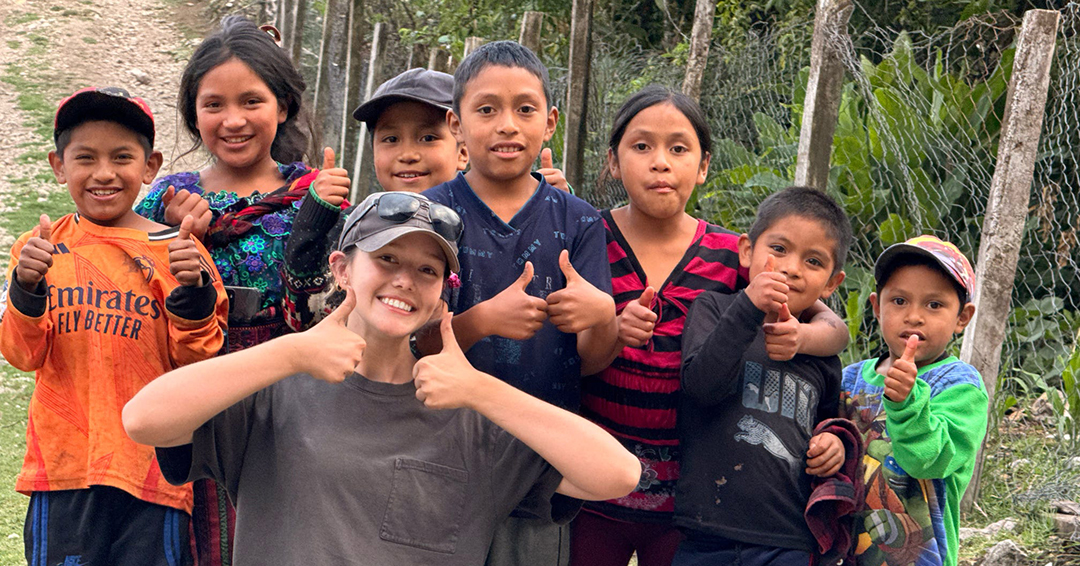 Sophie Bivins, a junior in chemical engineering, and 12 other students in Auburn's Engineers Without Borders chapter completed a clean water distribution system for villagers in Parramos Grande, Guatemala.
How many Auburn Engineering students does it take to lay eight kilometers of PVC pipe in a mountainous Guatemalan village, rebuild a failing distribution system, test samples and deliver clean, reliable water to 177 homes?
Thirteen… and Auburn’s Engineers Without Borders (EWB) chapter did it in just 10 days.
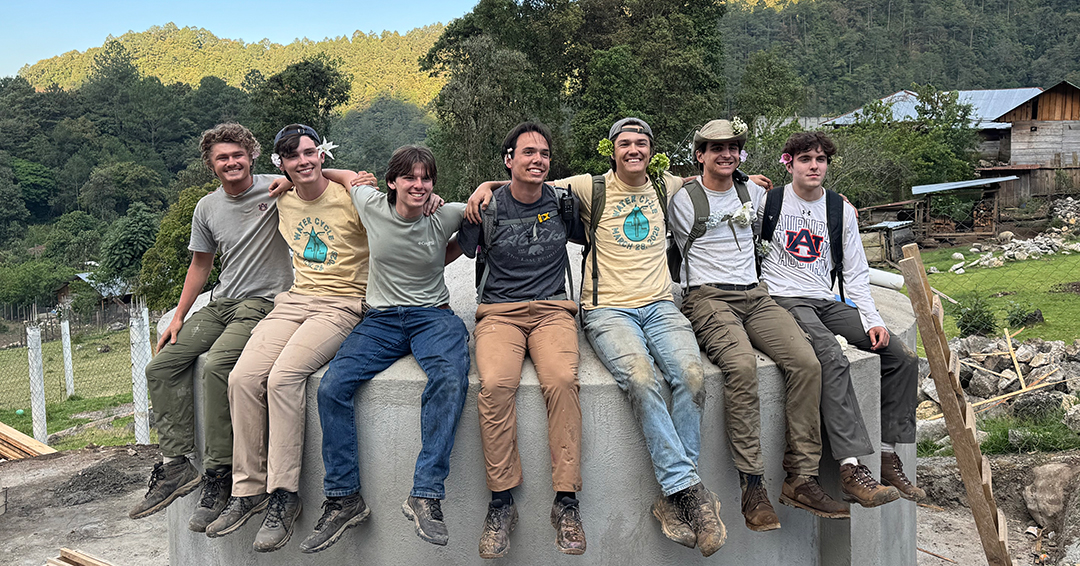
EWB-Auburn, a student-run organization that develops sustainable engineering solutions in communities domestic and abroad, completed a two-year project in Parramos Grande, Guatemala, in early May, turning unsafe water into a clean network.
“It’s heartwarming to see our students working hard to positively impact lives, and it’s heartwarming to see villagers overcome with joy after our team, our students, provided them with something we often take for granted,” said Christian Brodbeck, EWB-Auburn faculty advisor and director of engineering research operations.
“You see students grow through the design, through the planning, through the setbacks, through the moments where they must figure something out in real time. Then you see them in the community, working side-by-side with people who will use this system every day. That is the part that stays with you. That is the part that matters. To be part of their journey through this is among the most rewarding things you can do.”
Sydney Watwood, the team’s project lead and a junior in biosystems engineering, said she loves being able to take something that’s not working the way it should and figure out how to make it better.
“It makes you realize what we take for granted when I visit here (Parramos Grande), and how excited that community was to see water going into a tank,” she said. “Then I come home and don’t think about it when I turn on a faucet. It changes my appreciation for what I have and changes my motivation for doing what I do.”
‘One dot is too many’
The problem in Parramos Grande wasn’t just the village’s water distribution network. It was contaminated water. The village’s aging water system was damaged with cracked pipes, and low-pressure lines allowed dirty water to seep into the system.
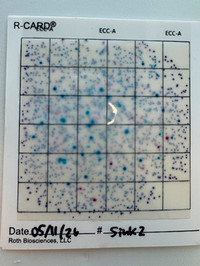
“Many houses have a spout. They have water flowing through and you might ask, ‘what are we doing here? They all have water,’” Watwood said. “Then we performed water quality testing.”
Samples were collected from sinks and taps throughout the village and placed on R-cards, a self-contained rapid rest that revealed contamination. Dark blue dots indicated E coli. Purple or reddish dots signaled other coliform bacteria.
The result: dots. Lots of dots.
“One dot is too many,” Watwood said. “You shouldn’t have E coli, chloroform or any bacteria in your water.”
The spring nearby was clean. The distribution system, however, was not. The solution: a complete rebuild.
Planning and implementation
Auburn-EWB spent two years designing this system, from source to spout. Students mapped the mountainside with drones, created high-resolution aerial imagery, built topographic models and divided the system into 400-meter construction zones. Each zone had its own map, its own materials list and its own sequence.
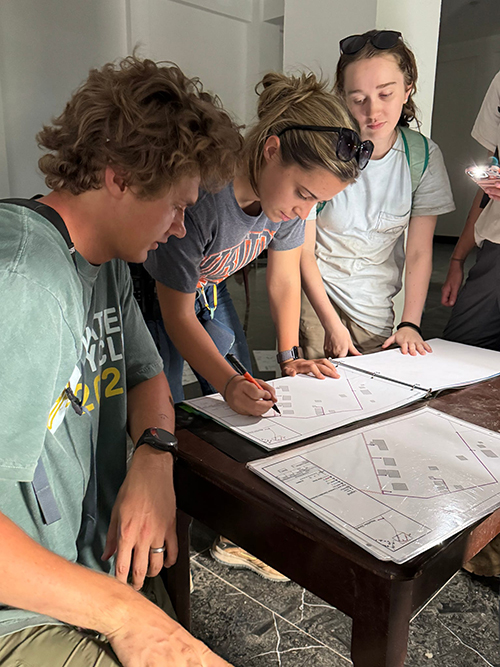
“We had eight sub-teams all working on a phase of what goes into making sure that the two weeks we have are as efficient and effective as possible,” said Brodbeck, who made the trip with fellow advisor Jose Vasconcelos, associate professor of civil and environmental engineering. “Everything from the distribution design to the GIS (Geographic Information Systems) team to the water quality team to the construction logistics team. This project required months of design work, building the maps and developing the construction plan. You can’t just wing it. You must be ready to go when you arrive.”
The team had eight days to install eight kilometers of pipe and connect 177 homes.
Each morning, Watwood, playfully named “Overlord” by peers, reviewed the previous day’s progress and finalized each new day’s plan. She briefed the team, handed out maps and materials and sent crews into the hills.
“Sydney is going to be the CEO of a large, multinational corporation one day,” Brodbeck said.
Watwood, who will soon intern at Indian Health Service, relishes these opportunities.
“Being a lead for one of these projects is so much like being a real engineer in the sense that there are real people dependent on you doing your job correctly,” she said. “You are coordinating things for a whole community that relies on what you do. There are not many opportunities like that. You can’t just do this as a resume-builder. It’s something that must be deeply impactful for you.”
Students spent days hauling PVC and gluing joints in the trenches. They pushed through heat, mud and one afternoon — monsoon-like conditions.
“Even when the weather turns on you, and it will, our students wouldn’t quit,” Brodbeck said. “At some point, you must pull them out of the rain. It’s that ‘work, hard work’ part of the Auburn Creed. You see it in them every day on a trip like this.”
‘The part that stays with you’
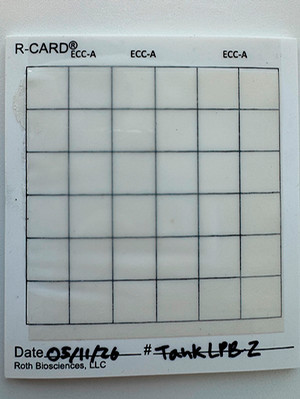
When construction was completed, one final water test remained. This time, there were no blue dots, no purple dots. No dots, period. Just clean water.
“This was one of those magical moments that I used to say happens once in a lifetime, but I believe it has happened now twice to me (Xeo, Guatemala in 2022) where the pressure test was a success,” Brodbeck said. “It was such a beautiful scene. The community came out. The children are following us. They were excited and they wanted to climb and look in the water tank. Everyone gathered at the tank at the end of the day to see the water coming in, to see the system working as designed, and we were grinning ear to ear. Just one of those perfect days in the rural mountains of Guatemala.
“You see a community get something they’ve never had before, something that changes daily life in a real way. That’s when all the long days and all the hard work make sense. That’s the part that stays with you.”
In August, a second EWB-Auburn team will travel to Quesimpico, Bolivia, to continue work on an irrigation system designed to support local agriculture. Building on the construction of a large water storage tank completed in 2025, the team will focus on installing distribution piping to deliver water to more than 20 agricultural fields, allowing farmers to irrigate their land more consistently and effectively.
EWB-Auburn’s Guatemala team will redesign and replace an orphanage’s aging water system in Santa Cruz Verapaz in May 2027. The work will focus on designing a well and pump, stabilizing storage capacity and creating a distribution layout that can be staff-maintained.