Graduate student in electrical and computer engineering runner-up at IEEE global research competition
Published: Jan 5, 2026 7:00 AM
By Joe McAdory
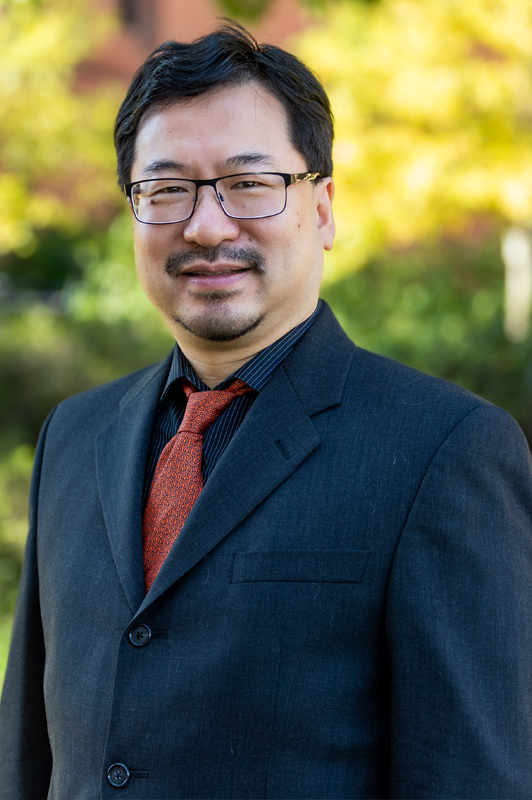
Shiwen Mao recognized Wesley O’Quinn’s potential the moment they met at an international conference, while O’Quinn was still an undergraduate.
“At that time, he independently secured research funding from a company, conducted his research, published his work and presented the paper at the conference,” said Mao, professor and the Earle C. Williams Eminent Scholar Chair in the Department of Electrical and Computer Engineering. “I was deeply impressed and subsequently invited him to work with me during the summer of 2019, supported by a National Science Foundation Research Experiences for Undergraduates award.”
Mao, who also directs the Wireless Engineering Research and Education Center, convinced O’Quinn — a full-time design engineering supervisor at the Southern Company — to enter Auburn Engineering’s graduate program. For the past two years, he researched, “applying advanced machine learning models to anomaly detection in industrial Internet of Things (IoT) settings.”
His hard work recently paid off on the world stage.
O’Quinn, who graduated on Dec. 13 with master’s and doctoral degrees in electrical and electronics engineering, earned second place at the Institute of Electrical and Electronics Engineers (IEEE) Communication Society’s Four-Minute Thesis (4MT) competition during the organization’s annual Global Communications (GLOBECOM) conference Dec. 8 in Taipei, Taiwan.
“It was definitely exciting and I was impressed by the quality of the presentations at the event,” O’Quinn said. “There were some projects sponsored by Qualcom and Aramco. So, it was cool that the judges saw fit to highly rank the presentation. It was also a really great way to finish my PhD. journey.”
The international competition challenged a pool of 55 Ph.D. candidates to present their research clearly and engagingly in just four minutes, using a single PowerPoint slide deck, with strict rules against props, edits or multimedia.
“Despite holding a demanding full-time position managing a large team of engineers, he excelled in his coursework and conducted outstanding research, as evidenced by this award,” Mao said.
O’Quinn’s 4MT, “Multimodal Anomaly Detection Techniques Applied to Industrial IoT (Internet of Things)”, addressed a high-stakes industrial challenge: detecting equipment failures before they happen. His work applied advanced machine learning methods to Industrial Internet of Things sensor data, enabling predictive maintenance strategies that reduce downtime and operational costs.
“The research essentially focused on how to perform anomaly detection using machine learning on large scale industrial equipment,” he said. “Leveraging advanced analytics on IIoT sensor data can significantly reduce equipment maintenance costs — basically, predicting equipment failures before they could happen. Based on this, Dr. Mao suggested I focus on anomaly detection.”
To tackle the problem, O’Quinn explored several techniques, including convolutional neural networks, variational autoencoders, functional data analysis and quantum machine learning.
His presentation highlighted four central ideas:
- Current industrial maintenance strategies are not cost-effective.
- Machine learning enables predictive maintenance that ensures reliability while reducing costs.
- Modern sensor and GPU technology have made this paradigm achievable at scale.
- His method provides improvements over other state-of-the-art techniques.
Communicating years of research in just four minutes — and doing so for a non-technical audience — added another layer of difficulty.
“This is very challenging as it is attempting to condense multiple years of research and multiple technical publications into just four minutes,” he said. “I attempted to mainly focus on the real-world benefit of the research and set the stage for why it is needed. Once the audience understood the problem well, it is much easier to explain the outcome of the solution.”
O’Quinn said Auburn Engineering’s graduate program prepared him for what lies ahead.
“I genuinely cannot imagine a better place to study,” he said. “I was given the freedom to dive really deep into particular areas of research while also being given all the support I needed.”
Completing both graduate degrees while maintaining a full-time career in a nuclear power plant was challenging, he said, but his passion for the work, and Mao’s mentorship, made it possible.
“Dr. Mao was instrumental in both recommending the path and providing support along the way,” O’Quinn said. “When you really love the material and have great professors to learn from, it makes it a lot easier.”
O’Quinn previously worked as an engineering supervisor for Southern Company/Georgia Power, mentoring junior engineers and working directly with the types of industrial systems that inspired his research.
He is now transitioning from industry to the classroom. O’Quinn accepted a job as assistant professor at the Samarkand International University of Technology in Uzbekistan.
“I am excited to be stepping into this role and hopefully be able to continue giving back to the field that has given me so much,” he said.
Media Contact: , jem0040@auburn.edu, 334.844.3467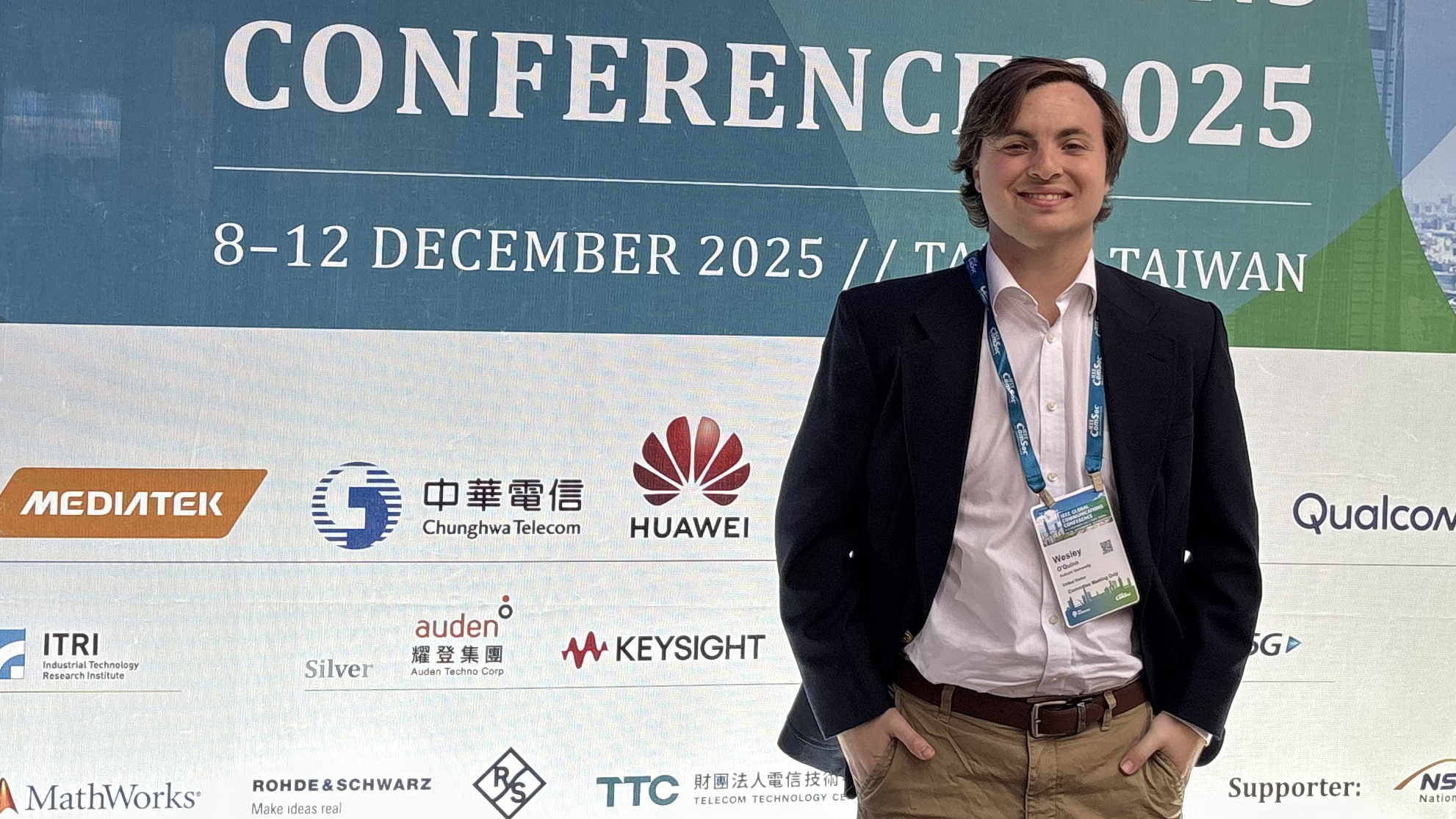
Wesley O'Quinn not only earned the international award while working full-time, but graduated in December and is now an assistant professor at the Samarkand International University of Technology in Uzbekistan.